

News New MIT research projects aim to tackle real-world challenges in water and food
Now in its 12th year, J-WAFS seed grants support projects that have the potential to create significant advancements in water and food for human need
Carolyn Blais Pinter July 8, 2026
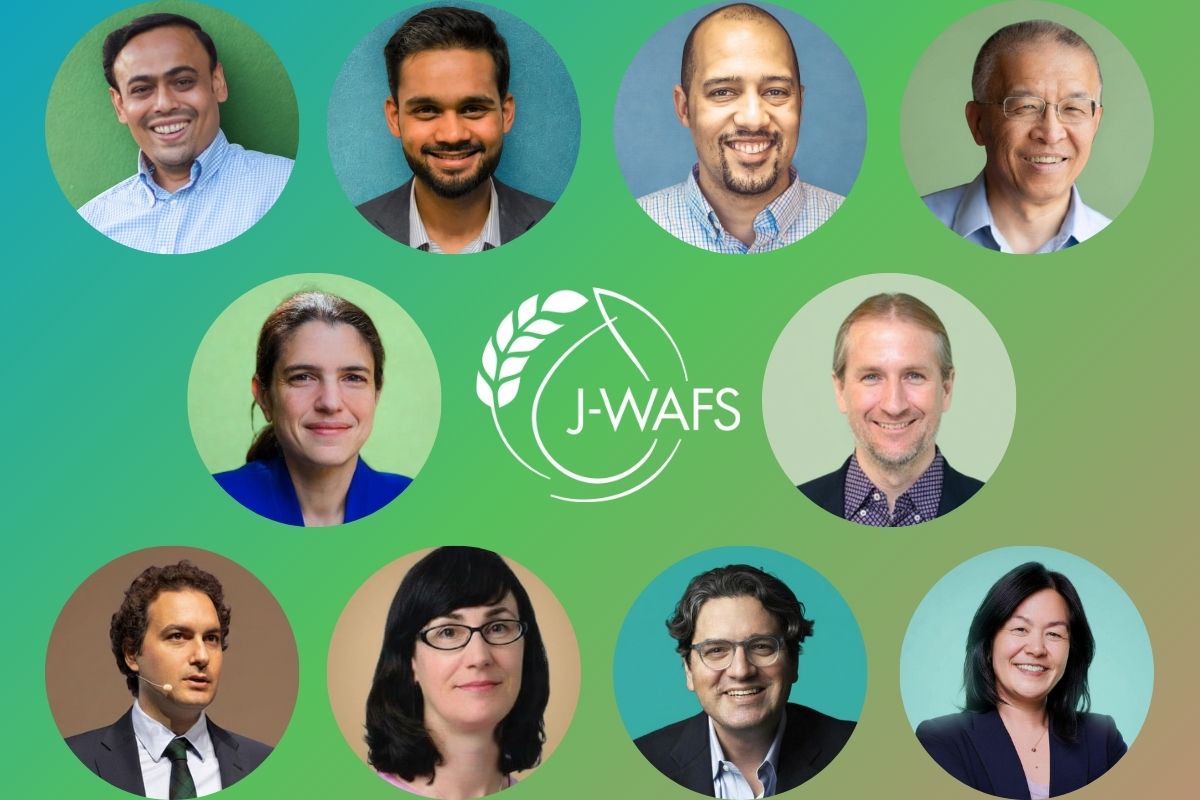
The 2026 J-WAFS seed grantees, starting with first row from L to R: Saurabh Amin, Deepjyoti Deka, Fikile Brushett, Gang Chen. Second row from L to R: Heather Kulik and Jeremiah Johnson. Third row from L to R: Benedetto Marelli, Stacy Springs, Giovanni Traverso, Evelyn Wang
Last fall, J-WAFS solicited letters of interest from MIT principal investigators from all departments, labs, and centers for the 2026 J-WAFS Water and Food Seed Grants. This year’s call received 45 letters of interest from 50 MIT faculty—a record number of submissions, greater than any year before. Through a peer-review process and with the support of a review committee, today, J-WAFS is happy to announce that 8 projects, led by ten MIT researchers have been selected to receive funding.
Seed grants award up to $150,000 over a two-year period and support new, innovative projects at MIT. Projects may address all areas related to water and food security, safety, and sustainability for human use. Of particular interest are projects at the climate/water nexus or the climate/food nexus, as many selected projects this round exemplify. From climate resilient greenhouses to more efficient thermal desalination to enhanced self-cooling crops, the 2026 seed grants are addressing the planet’s diverse needs for water and food at a time of extreme, unprecedented weather events.
Click each link below to learn more about this year’s seed grants and the researchers leading them.
- Protecting community groundwater security: Network-based planning for data centers in water-stressed India
PI: Saurabh Amin, Edmund K. Turner Professor of Civil and Environmental Engineering
and Deepjyoti Deka, Research Scientist at MITEI
- Redox electrodialysis metathesis systems for high-yield water recovery
PI: Fikile Brushett, Ralph Landau Professor of Chemical Engineering Practice and the Director of the David H. Koch School of Chemical Engineering Practice
- Efficient multi-stage distillation
PI: Gang Chen, Carl Richard Soderberg Professor of Power Engineering in the Department of Mechanical Engineering
- Machine learning-guided ligand design of PolyMOC gels for PFAS removal
PIs: Heather Kulik, Lammot du Pont Professor in the Departments of Chemical Engineering and Chemistry
and Jeremiah Johnson, A. Thomas Guertin Professor of Chemistry and Associate Department Head in the Department of Chemistry
- Engineering thermo-responsive plant growth-promoting bacteria to induce pre-emptive stomatal cooling in crops
PI: Benedetto Marelli, Professor in the Department of Civil and Environmental Engineering
- Lyophilized single-tube argonaute-based multiplex detection of waterborne viruses
PI: Stacy Springs, PhD, Executive Director of MIT’s Center for Biomedical Innovation (CBI)
- Continuous methane sensing in cattle to accelerate climate-smart feed development
PI: Giovanni Traverso, Professor of Mechanical Engineering
- Climate resilient greenhouses in water scarce and inarable environments
PI: Evelyn N. Wang, Vice President for Energy and Climate and the Ford Professor of Engineering in the Department of Mechanical Engineering