

Our Research Climate resilient greenhouses in water scarce and inarable environments
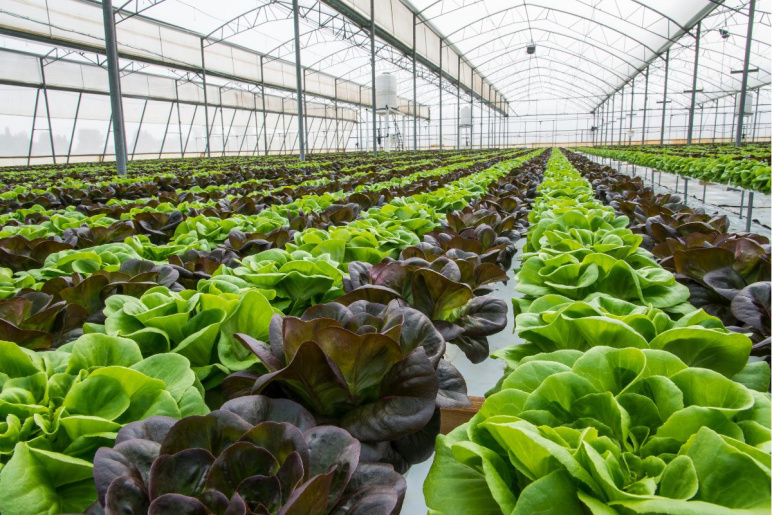
A greenhouse with lettuce crops. Image credit: Adobe stock
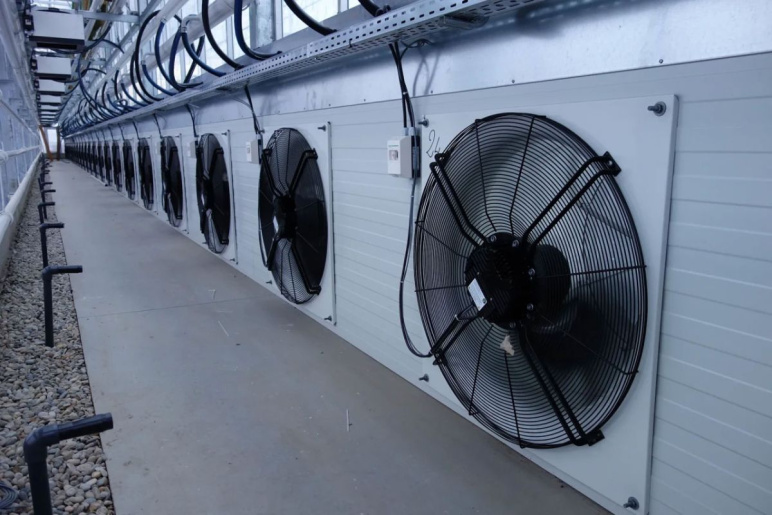
Greenhouse ventilation systems to help maintain indoor microclimate. Image credit: HORCONEX
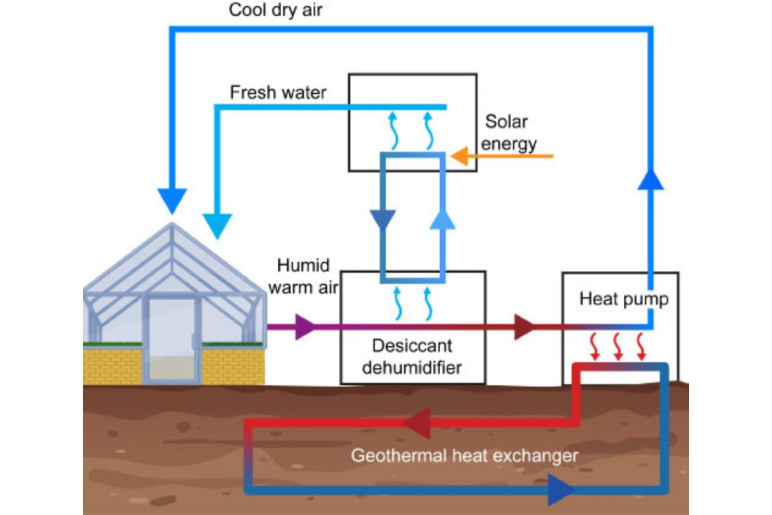
Diagram of proposed coupled system for coupled ground source heat pump and solar-powered desiccant dehumidification system. Image credit: James H. Zhang and Adobe stock
A greenhouse with lettuce crops. Image credit: Adobe stock
Greenhouse ventilation systems to help maintain indoor microclimate. Image credit: HORCONEX
Diagram of proposed coupled system for coupled ground source heat pump and solar-powered desiccant dehumidification system. Image credit: James H. Zhang and Adobe stock
Principal Investigator

Evelyn Wang
- Vice President for Energy and Climate
- Ford Professor of Engineering
- Department of Mechanical Engineering
Evelyn N. Wang, PhD, is the Vice President for Energy and Climate and the Ford Professor of Engineering at MIT. She previously served as Director at the U.S. Department of Energy’s Advanced Research Projects Agency-Energy (ARPA-E) from 2023-2025. At MIT, she developed technologies for thermal management, energy conversion and storage, and water harvesting and purification. She is a member of the National Academy of
Engineering, and Fellow of the American Society of Mechanical Engineers, American Association for the Advancement of Science, and the American Academy of Arts and Sciences.
Challenge:
Can we reduce the energy and water consumption of greenhouse agriculture to aid the food security of inarable regions?
Research Strategy
- Develop a computation model to couple greenhouse building envelope, ground source heat pump design, and solar-powered dehumidification system design
- Prototype closed-loop solar-powered dehumidification flow system
- Experimentally investigate long-term exposure to desiccant effects on crop growth
Project description
Reaching food security for regions with minimal arable lands is a grand challenge for many future population centers. Greenhouse farming can help address this gap where local conditions are inhospitable to open-field farming. However, to maintain favorable growing conditions, greenhouses rely on either energy-intensive or water-intensive technologies to regulate the indoor microclimate. Developing sustainable and cost-effective greenhouse technologies at the water-food-energy nexus will be critical to meet demand in resource-constrained and water-scarce regions.
This project proposes to develop a coupled solar-powered desiccant dehumidification system and ground source heat pump system to regulate greenhouse microclimates. The combined system will simultaneously reduce the cooling energy demand by utilizing available natural resources and increase water efficiency by recycling vapor lost through evapotranspiration. Through the proposed system, the team plans to derisk and find economically viable pathways to deploy sustainable greenhouses in food insecure communities.
Additional Details
Impact Areas
- Water
- Food
- Climate & Sustainability
Research Themes
- Water Purification & Desalination
- Sustainability & Adaptation
- Transforming Food Systems
Year Funded
- 2026
Grant Type
- Seed Grant
Status
- Ongoing