
J-WAFS Water and Food Seed Grant (Annual)
Seed Grant letters of interest were due 5:00 p.m. ET on Tuesday, November 25, 2025. Please check back in the fall of 2026 for the next Seed Grant call.
J-WAFS seed grants support innovative MIT research that has the potential to have significant impact on water and food supply challenges for human need.
J-WAFS welcomes proposals spanning fundamental science, engineering and technology, supply chains, big data, business models, development efforts, economics, climate interactions and impact, urban design and infrastructure, and more. We invite proposals for projects that can effect meaningful, measurable, improvements to humankind’s need for sustainable supplies of water and food.
Seed grant proposals should be for new, innovative projects that are sufficiently distinct from prior research. We look for early-stage projects that can benefit from one or two years of funding in order to: (1) establish proof of concept or gather critical data that will position the project to qualify for other future sources of funding; or (2) have a clear and significant outcome without subsequent awards. Projects that are intended to have real-world impact are favored. Multidisciplinary projects and projects that have well defined regional or international reach are welcome. New collaborations including team members in different schools of MIT are encouraged, as are proposals from junior faculty. Relevant interactions with industry are also encouraged.
Each year, J-WAFS typically supports up to eight seed grants of up to $150,000, comprising up to $75,000 per year for one to two years, free of overhead charges, to be spent at MIT. Eligible proposals that further J-WAFS’ mission are encouraged from all MIT schools and departments.
MIT researchers submitting proposals can create an account on the proposal submission site to begin the submission process.
Eligibility: Proposals are sought from MIT principal investigators from all departments, labs, and centers of MIT. The principal investigator submitting the proposal must be an MIT professor or a member of the research staff with principal investigator privileges (generally senior or principal research scientist, or senior or principal engineer). PIs may participate on up to two submissions per year. Previous and current J-WAFS PIs are eligible.
*** Note that our seed grant proposal process has changed. We now require an initial letter of interest. Full proposals will be welcome by invitation based on review of the LOIs. ***
This year's timeline is as follows:
Thursday, September 25, 2025: J-WAFS RFP announced
Friday, October 17, 2025: WizeHive online submission portal open for letters of interest
Tuesday, November 25, 2025: Letters of interest due (by 5 pm)
By December 19, 2025: Invitations to submit full proposal
Friday, January 30, 2026: Full proposals (including budget template) due (by 5 pm)
Spring, 2026: Announcement of funded projects
Tuesday, September 1, 2026: Start of funded projects
Questions? Contact Carolyn Blais Pinter, J-WAFS senior communications and program manager, at cblais@mit.edu
Projects
95 results
Lyophilized single-tube argonaute-based multiplex detection of waterborne viruses
Stacy Springs, MIT's Center for Biomedical Innovation, Food Supply Chain, Analytics and Sensing Initiative at MIT Sloan
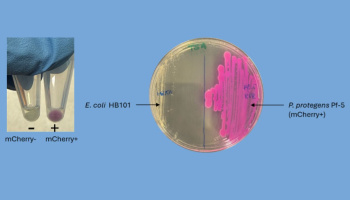
Engineering thermo-responsive plant growth-promoting bacteria to induce pre-emptive stomatal cooling in crops
Benedetto Marelli, Department of Civil and Environmental Engineering
Redox electrodialysis metathesis systems for high-yield water recovery
Fikile Brushett, Department of Chemical Engineering
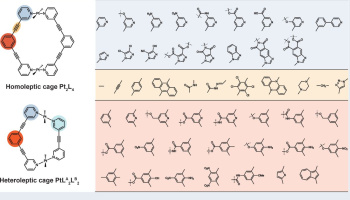
Machine learning-guided ligand design of PolyMOC gels for PFAS removal
Heather J. Kulik, Department of Chemical Engineering, Department of Chemistry

Jeremiah Johnson, Department of Chemistry

Protecting community groundwater security: Network-based planning for data centers in water-stressed India

Saurabh Amin, Department of Civil and Environmental Engineering

Deepjyoti Deka, MIT Energy Initiative
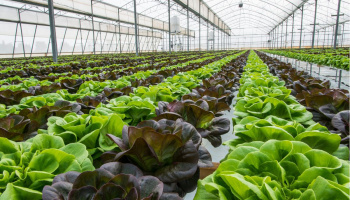
Climate resilient greenhouses in water scarce and inarable environments

Evelyn Wang, Department of Mechanical Engineering
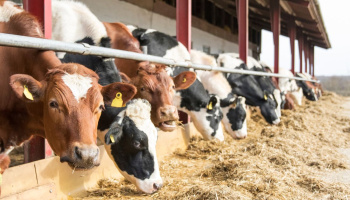
Continuous methane sensing in cattle to accelerate climate-smart feed development

Giovanni Traverso, Department of Mechanical Engineering
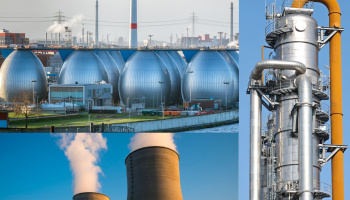
Efficient multi-stage distillation

Gang Chen, Department of Mechanical Engineering
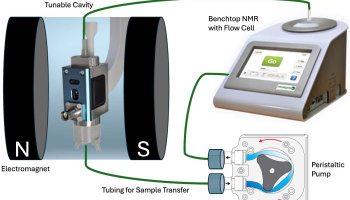
Bench-top NMR with dynamic nuclear polarization for ultra-sensitive PFAS detection

Timothy Swager, Department of Chemistry

Robert Guy Griffin
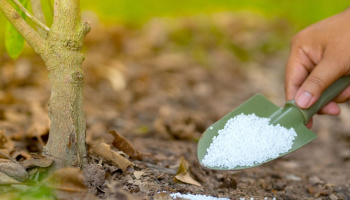
Toward nitrogen-fixing crops: Improving nitrogenase activity in non-diazotrophic hosts
Daniel Suess, Department of Chemistry
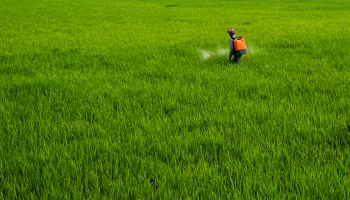
Stable, low-cost engineered proteins as biofungicides

Hadley D. Sikes, Department of Chemical Engineering
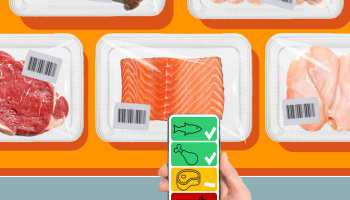
Food-safe, wireless RFID sensor on smart packaging for pH monitoring in the cold chain

Sanjay Sarma, Department of Mechanical Engineering
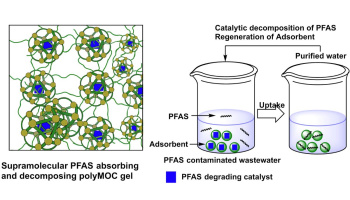
Fluorine-free materials to trap and destroy PFAS
Jeremiah Johnson, Department of Chemistry
Toward sustainable food protein manufacturing

Peter Dedon, Department of Biological Engineering
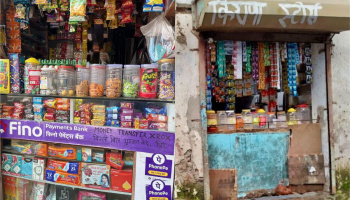
Optimal subsidy design: Application to food assistance programs

Ali Aouad, MIT Sloan School of Management
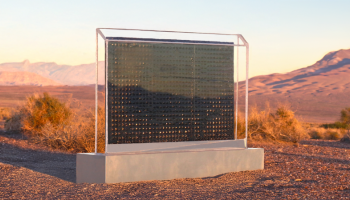
Global access to safe drinking water in resource-constrained and water scarce areas

Xuanhe Zhao, Department of Mechanical Engineering
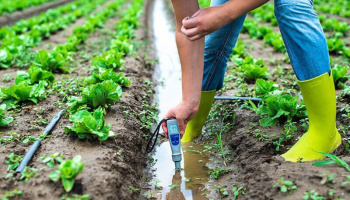
AI enabled spectral fingerprinting of pathogens for rapid food and water screening

Loza Tadesse, Department of Mechanical Engineering
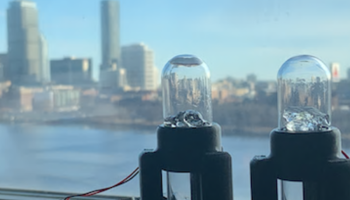
High-efficiency atmospheric water harvesting enabled by vibrational actuation

Svetlana Boriskina, Mechanical Engineering Department
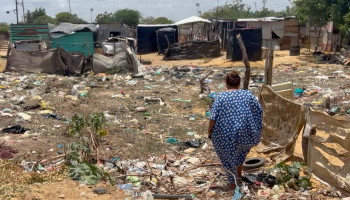
Empowering Indigenous communities: A framework for climate resilience and migration planning in La Guajira, Colombia
Sarah Williams, Department of Urban Studies and Planning

Eran Ben - Joseph, Department of Urban Studies and Planning
Gabriella Carolini, Department of Urban Studies and Planning
Janelle Knox-Hayes, Department of Urban Studies & Planning
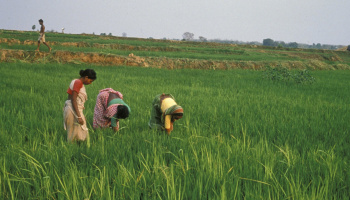
National crop type maps of India using deep learning and street view imagery

Sherrie Wang, Department of Mechanical Engineering, Institute of Data, Systems, and Society
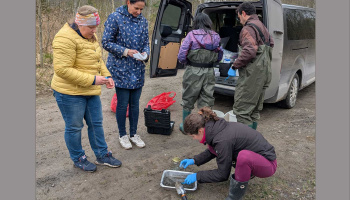
Protecting drinking water from widespread organic contaminants using engineered soil bacteria

Christopher Voigt, Department of Biological Engineering
Kate Brown, Program in Science, Technology, and Society

Victoria Chen, Biological Engineering Department
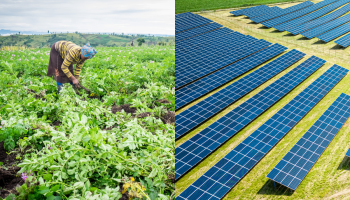
Food security in Africa under a changing climate – Navigating the energy and agricultural transition to net zero

Jennifer Morris, MIT Center for Sustainability Science and Strategy, MIT Energy Initiative

Adam Schlosser, MIT Center for Sustainability Science and Strategy

Kenneth Strzepek, MIT Center for Sustainability Science and Strategy, J-WAFS
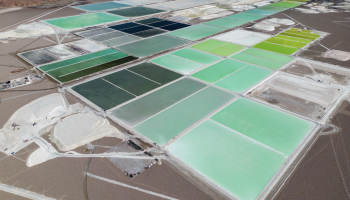
Predictive activity coefficient and diffusion models for transport in multicomponent brines

John H. Lienhard V
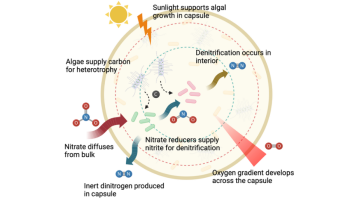
Denitrifying capsules to clean water sources

Andrew Babbin, Department of Earth, Atmospheric and Planetary Sciences