

Our Research Incentive design to promote long-term adoption of sustainable practices by smallholder farmers in India
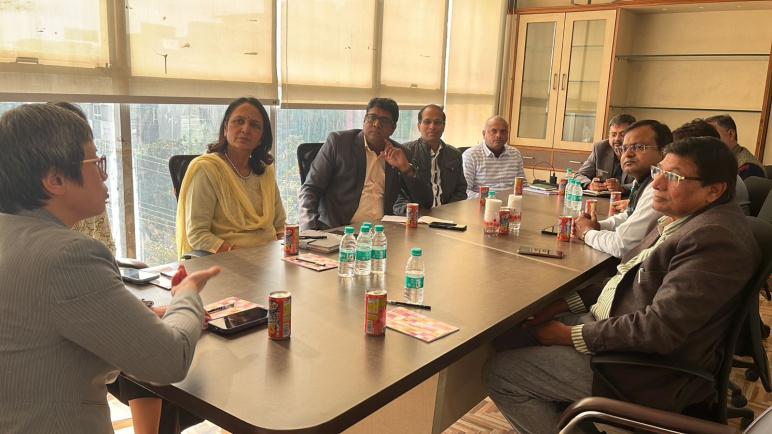
Professor Zheng discusses sustainable incentive programs with localized agricultural resource hubs (KVKs) and farmer representatives in Uttar Pradesh, India.
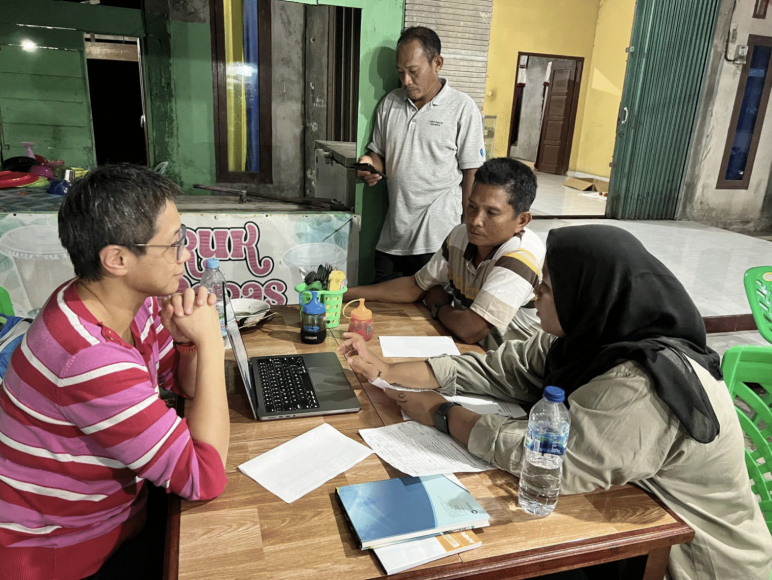
Yanchong (Karen) Zheng engages in more discussions with stakeholders in the field.
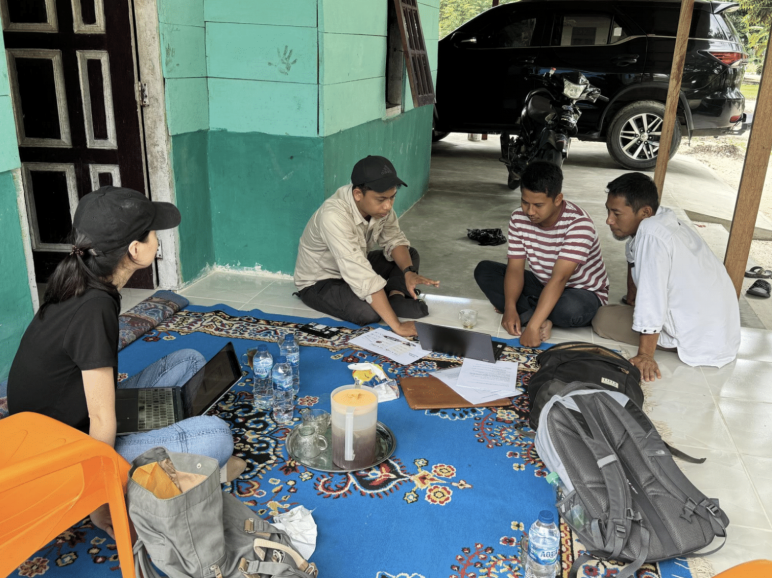
The researchers continue discussions with stakeholders in the field.
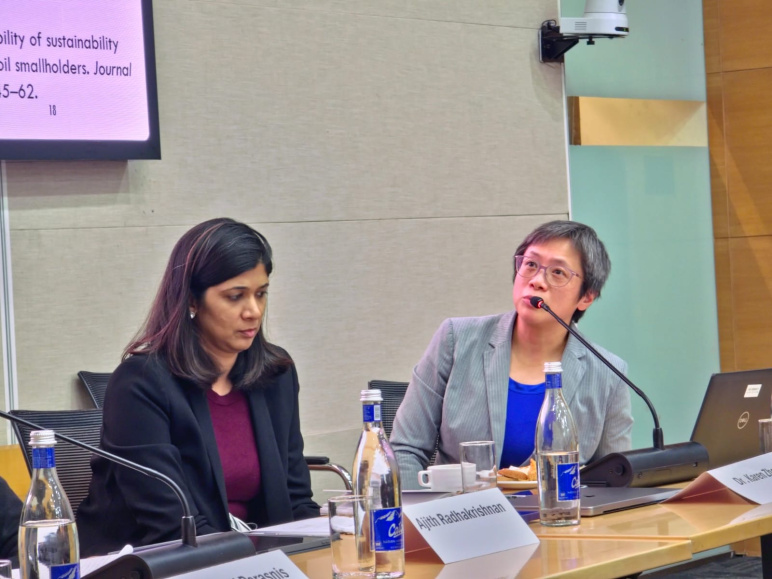
Professor Zheng presents at a workshop organized by the 2030 Water Resources Group, World Bank to both public and private organizations, sharing research objectives and plans, and obtaining feedback. The workshop happened in New Delhi, India and involved 20+ participants.
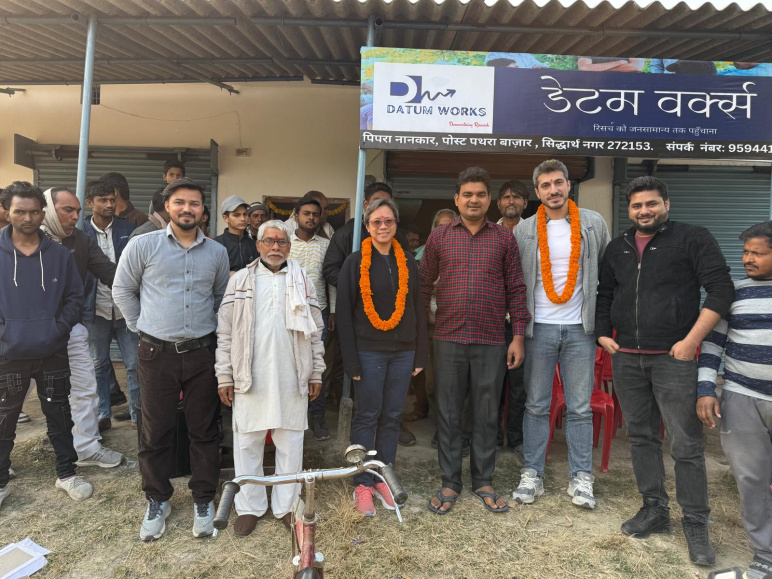
Professor Zheng and research team meet with farmers in Uttar Pradesh, India.
Professor Zheng discusses sustainable incentive programs with localized agricultural resource hubs (KVKs) and farmer representatives in Uttar Pradesh, India.
Yanchong (Karen) Zheng engages in more discussions with stakeholders in the field.
The researchers continue discussions with stakeholders in the field.
Professor Zheng presents at a workshop organized by the 2030 Water Resources Group, World Bank to both public and private organizations, sharing research objectives and plans, and obtaining feedback. The workshop happened in New Delhi, India and involved 20+ participants.
Professor Zheng and research team meet with farmers in Uttar Pradesh, India.
Principal Investigator

Y. Karen Zheng
- George M. Bunker Professor
- Associate Professor of Operations Management
- Sloan School of Management
Yanchong (Karen) Zheng is the George M. Bunker Professor and an Associate Professor of Operations Management at the MIT Sloan School of Management. Her recent research focuses on two general topics: (I) the design of incentives, technologies, and behavioral interventions to enhance efficiency, welfare, and sustainability in food and agriculture systems, with a focus on smallholder supply chains; and (II) the role of information transparency in driving environmentally and socially responsible behaviors. In her research, Zheng employs a behavior-centric, data-driven, field-based approach, and she collaborates with both public and private partners on the ground to create positive impacts to society.
Challenge:
How can we design effective and practical incentive systems to motivate widespread, permanent adoption of sustainable practices by smallholder farmers?
Research Strategy
- Develop effective and scalable incentive systems and the related verification mechanisms to enable permanent adoption of desirable sustainable practices by smallholder farmers
- Utilize field-based simulation experiments and randomized controlled field trials to provide evidence-based policy recommendations in innovative funding mechanisms for supporting widespread, permanent adoption of sustainable agriculture
- Collaborate with field partners to implement effective incentive systems in the local communities and perform rigorous impact assessment of the implementation
Project description
This project aims to develop innovative incentive mechanisms to enable widespread, permanent adoption of sustainable practices by smallholder farmers. The team will examine the effectiveness of two different incentives: a fixed reward prevalently used in payments for ecosystem services programs and carbon offsetting projects; and a supply-dependent mechanism where sustainable farmers receive a premium per unit supply plus a fixed bonus. The researchers will examine the efficacy of these incentives in randomized controlled field trials with smallholder farmers in India.
In particular, the research team is collaborating with the 2030 Water Resources Group, World Bank to design effective incentive structures for scaling the adoption of sustainable agricultural practices in Uttar Pradesh, India through the UP Accelerator Program. Given the prominence of rice-wheat systems in the state, the team will initially focus on developing and operationalizing innovative incentive mechanisms to motivate permanent adoption of Direct Seeded Rice (DSR) practices, which have been proven to have significant productivity and environmental advantages over traditional planting methods. In the one-year scoping study, the team will engage with various stakeholders including officials, private-sector players, and local communities to select the target region for initial intervention. A pilot experiment will be designed and conducted with representative farmer samples in the target region to obtain proof of concept regarding the efficacy of different incentives. Results from the pilot will also inform how the incentives may be adapted to suit local conditions to further enhance efficacy. Eventually, the researchers aim to have a refined design of the incentive structure for scaled implementation in the next phase of the project.
Outcomes
- Developed innovative frameworks to design incentive mechanisms for motivating permanent adoption of sustainable agricultural practices by smallholder farmers. This project focused specifically on motivating rice farmers to adopt a more sustainable cultivation method called “direct-seeded rice” (DSR)
- Designed and conducted a small-scale pilot randomized controlled trial (RCT)with 240 rice farmers across 16 villages in Uttar Pradesh (UP), India, to examine the effectiveness of different types of incentives developed in motivating farmers’ DSR adoption
- The RCT pilot revealed that offering unconditional upfront payment before sowing led to significantly higher initial adoption than offering conditional payment at harvest (i.e., payment is only issued to the farmer given verified practice of DSR). However, adopting farmers under unconditional upfront payment experienced a significantly higher rate of crop failure; conversely, adopting farmers under conditional payment had a much higher success rate of practicing DSR
- Revealed policy insights that recommend that incentives which encourage uptake should be careful not to expand “adoption without capability.” Optimal policy should optimize production/welfare outcomes and pair incentives with proper support, rather than focusing solely on uptake
News

Additional Details
Impact Areas
- Food
- Climate & Sustainability
Research Themes
- Sustainability & Adaptation
- Economics, Policy, & Practices
- Modeling & Data Analytics
- Equity & Access
Year Funded
- 2025
Grant Type
- India Grant
Status
- Completed