
News MIT Water, Food, and Agriculture 2026 Prize Night
Sofia Rutman May 6, 2026
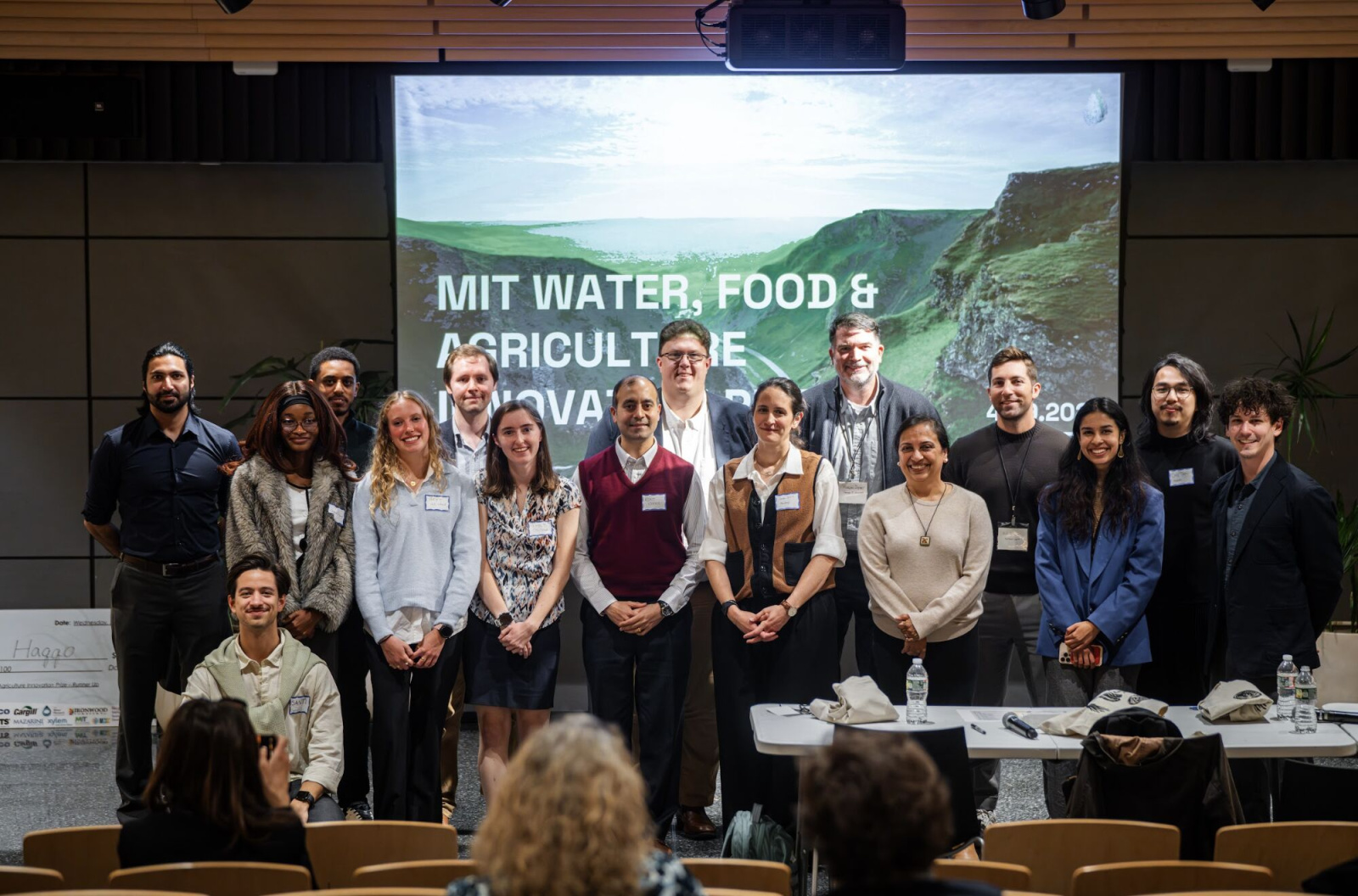
Judges and finalists pose for group photo. Photo credit: Max Bueno
On April 29, 2026, MIT’s Water, Food, and Agriculture Innovation Prize was awarded to protein feed producer Revolv. The team turns organic waste into low-cost, high-protein chicken feed for Ethiopian farmers through a process that uses black soldier flies. As the fly larvae eat the compost and grow, their excrement can be used as fertilizer, while the insects themselves become sustenance for chickens who are then able to increase their egg output.
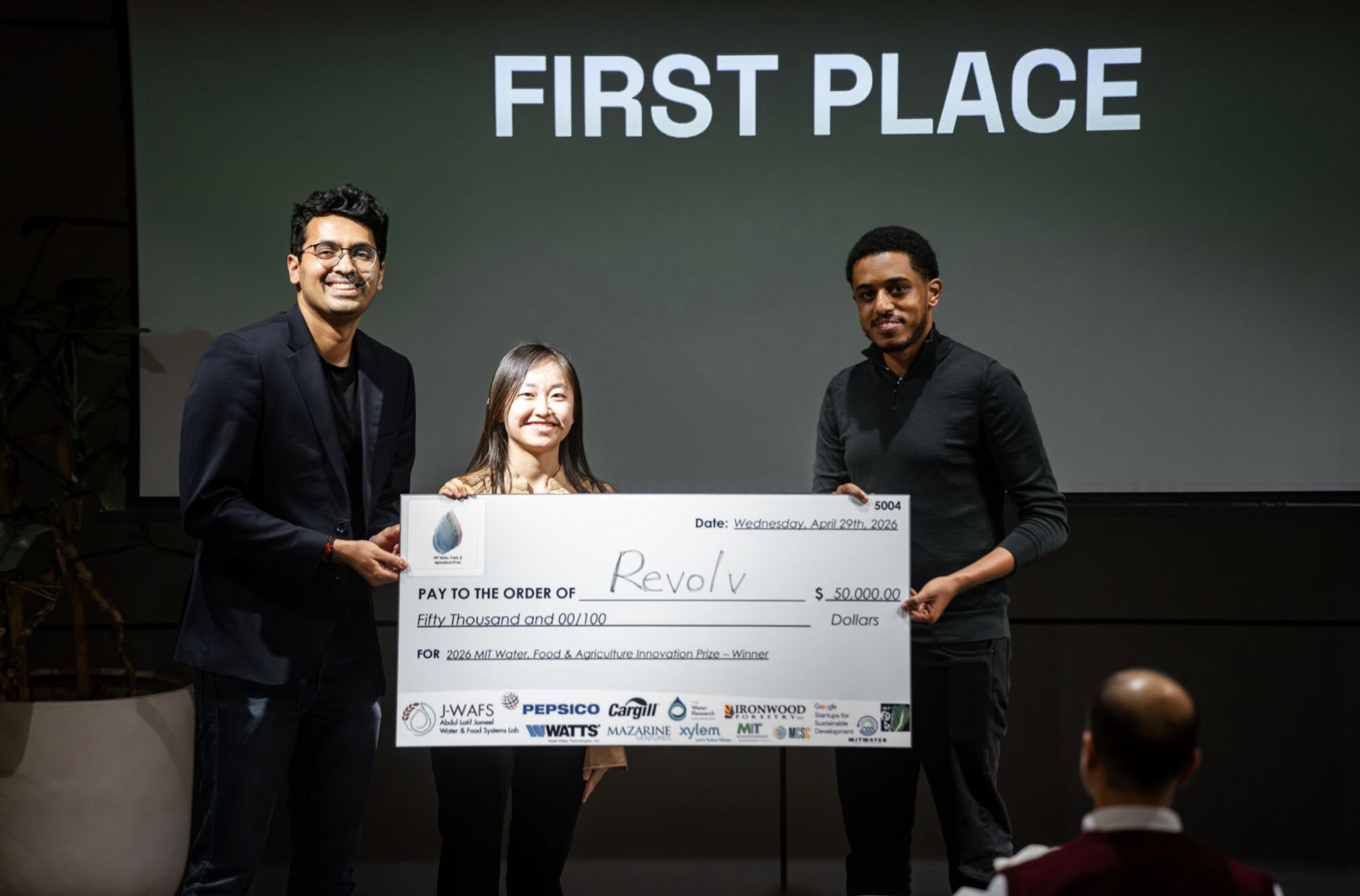
Winning Revolv team holds novelty check for $50,000. Photo credit: Max Bueno
On average, Ethiopian farmers pay three times more than their global peers pay for chicken feed, meaning many Ethiopian farmers are unable to feed their chickens. Though black soldier fly larvae have been used in agriculture in the United States and Canada, the benefits were less evident in markets with wide competition. In Ethiopia, however, the low cost allows farmers to purchase protein feed, expanding the market and reducing financial strain on smallholder farmers.
The Water, Food, and Agriculture Innovation Prize aims to support emerging student entrepreneurs in the water, food, and agriculture space, awarding $50,000 in funding to the winning team and $10,000 to the runner-up. Supported by J-WAFS, the prize helps to bring innovative technologies from early-stage startups into industry viability. The competition is organized by MIT students from the MIT Water Club and MIT Food & Agriculture Club, and student teams from universities and colleges around the world may participate. Since its inception in 2015, the prize has supported 30 winners, awarding $300k in non-dilutive funding.
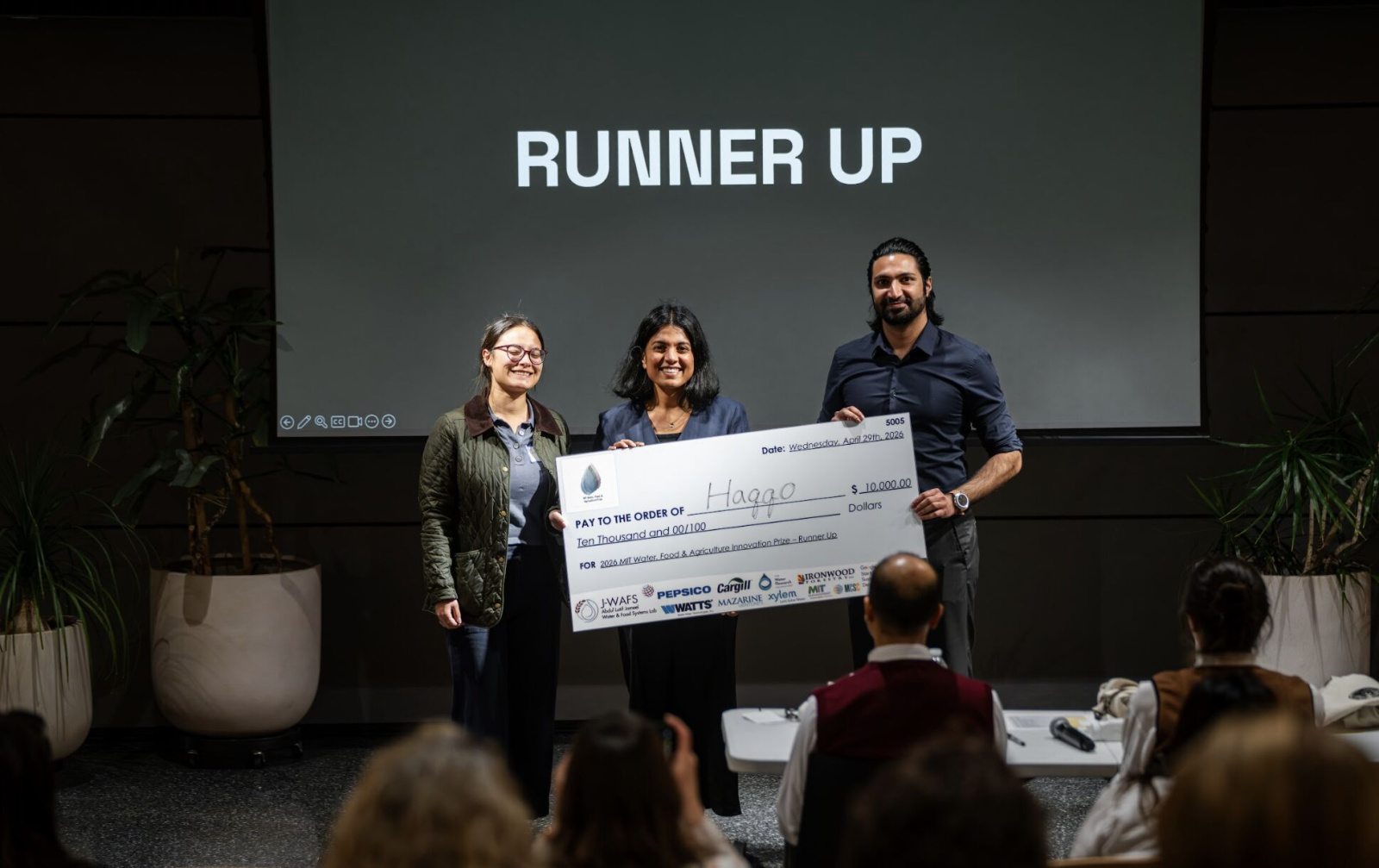
Runner-up Haqqo team poses with check for $10,000. Photo credit: Max Bueno
The runner up prize went to Haqqo, an app that connects rice farmers in India directly with buyers to allow them to sell their rice at fair market prices. Because of the short turnaround period for rice harvesting, rice farmers are forced to sell their harvest quickly to village brokers in order to obtain the cash needed to begin the next season’s planting, often losing 35-45% of their crop value. Haqqo allows farmers to still sell their product quickly, but at fair market prices.
The panel of judges included:
- Rohit Karnik, director of J-WAFS
- Morgan Defoort, managing partner of the climate tech investment firm Factor[e] Ventures
- Vedika Bhandarkar, president of Water.org, a clean water and sanitation nonprofit
- Nick Schroer, partner at regenerative agriculture investment firm Trailhead Capital
- Sezin Yigit, head of business development at Breaking, a company using synthetic biology to break down plastics.
In a break between pitches, the judges took part in a panel discussion on the challenges of improving and solving difficult problems in water and food systems.
Among the other pitches presented were:
- BioBuoy, a modular floating water remediation technology that removes heavy metals from water
- Naiad Technologies, a water filtration device to remove phosphates and prevent algae blooms
- PlantNano Labs, a plant nutrition monitoring system
- Pampafy, a system for consolidating Latin American grain purchasing so that farmers can compare prices
- Smartel, a company which produces small-scale solar-powered hydroponics systems.
Congratulations to both the prize organizers and all of the finalist teams who participated, proving the next generation of leaders in the water, food, and ag spaces are already making significant strides.
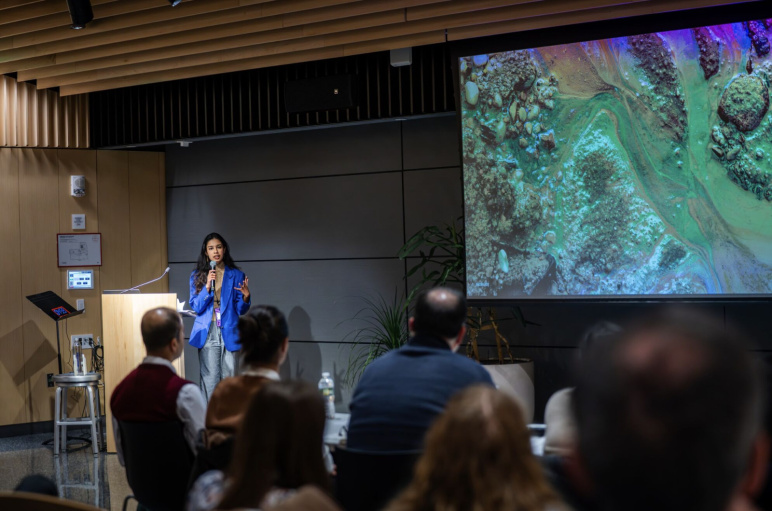
Presenter from Biobuoy, a company producing floating water remediation technology that filters heavy metals from polluted water using a nature-based bottom-up modular system. Photo credit: Max Bueno

A panel of this year's judges sit at the front of the room for a discussion on investing, innovating, and solving the hardest problems in food and water systems. Photo credit: Max Bueno
Presenter from Biobuoy, a company producing floating water remediation technology that filters heavy metals from polluted water using a nature-based bottom-up modular system. Photo credit: Max Bueno
A panel of this year's judges sit at the front of the room for a discussion on investing, innovating, and solving the hardest problems in food and water systems. Photo credit: Max Bueno