
News MIT travel grantees return from 2026 World Water Week in Stockholm
Sophia Steckler, J-WAFS October 5, 2026
Hao Nghi Luu and Priyanka Salunkhe, two MIT graduate students working at different ends of the water field, traveled to Stockholm for World Water Week 2026 with the help of J-WAFS Travel Grants, supported by gifts to J-WAFS from our Research Affiliate companies, Xylem Inc. and GoAigua. Hao engineers yeast for water remediation; Priyanka studies how water resilience can be integrated into city planning. Under the conference theme, Water for People and Progress, both left with the same broader lesson: water solutions succeed or fail in the complex human systems around them.
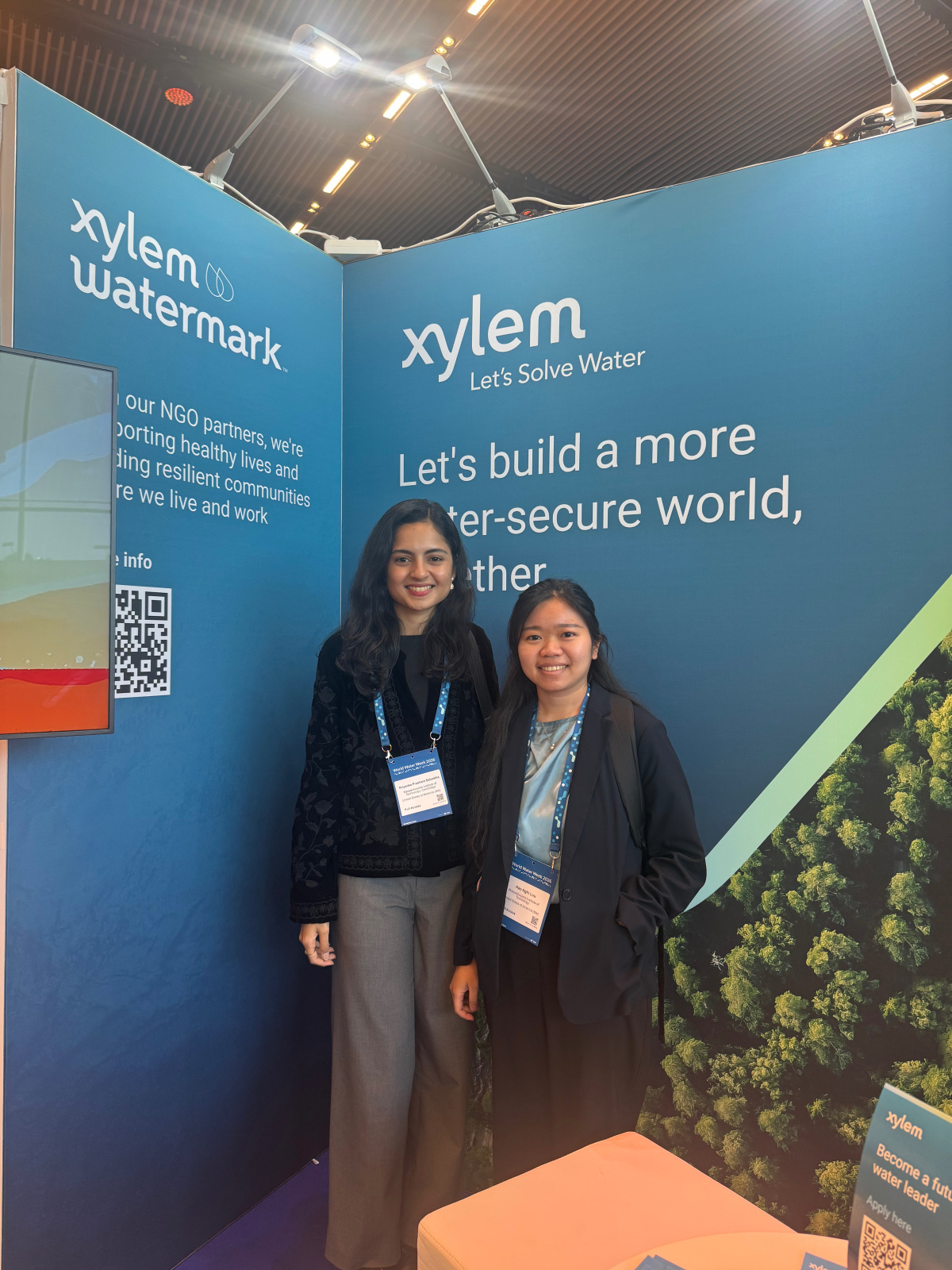
2026 Stockholm grantees Priyanka Salunkhe and Hao Nghi Luu
Hao: from better technology to real world impact
When Hao arrived to the conference, she was thinking about one question: how could she build a better technical solution for removing toxic elements from wastewater? Hao is a student in the Materials Science and Engineering Department, and her research centers on developing strains of baker’s yeast that can uptake contaminants such as selenium from mining wastewater. She was used to approaching the problem through biological mechanisms, removal efficiency, and technical performance.
The week opened with a line from Aaron Salzberg, CEO of the American Water Resources Association, that stayed with her: “prevention is easier than remediation” when it comes to lead in drinking water. His remarks pointed to themes of accessibility, resilience, and the central role of stakeholders in decision-making for reducing lead-containing parts and components in water infrastructure. These themes returned during a groundwater session, where a table discussion among attendees landed on a shared conclusion. Scientific data is not enough on its own. It also has to be accessible and communicated in ways that people can act on.
Toward the end of the week, conversation turned to financial models and access to water, and to the gap between innovation and implementation. In a session called “From Innovation to Impact: Corporates Scaling Water Solutions,” the discussion of Flocean, a lower-energy desalination technology, showed that a strong environmental and economic case does not guarantee adoption, since it’s difficult to convince investors to take a risk on new infrastructure. Hao came away seeing technical innovation and business models not as competing solutions, but as two things that have to develop together.
In a corporate water stewardship session, Hao asked Coca-Cola’s sustainability director how water quality figures into replenishment frameworks alongside volume. Cleaning contaminated water is fundamentally different from replacing an equivalent amount of it, and she left without a simple answer, which was itself instructive.
Hao arrived thinking about how to improve a technology, but left with a broader question: how can she develop a technology that is technically strong, demonstrable in the real world, economically viable, and able to fit into the human systems that determine whether a water solution creates impact? That question has only deepened her motivation to continue her research and contribute to the water community.
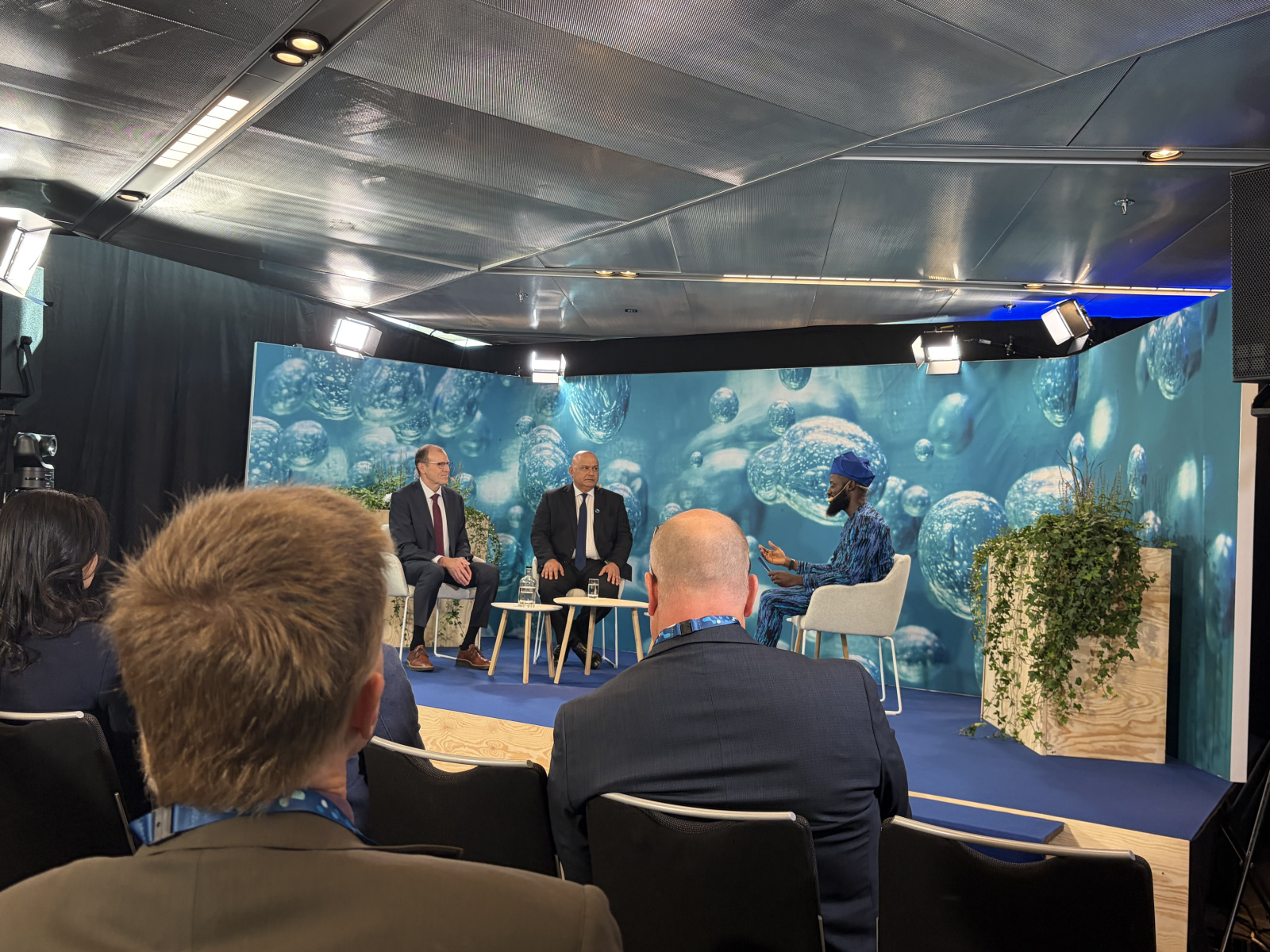
Group panel from World Water Week
Priyanka: water security is about people
Priyanka, a master’s student in the Department of Urban Studies and Planning, arrived curious about how solutions to water challenges travel from national policy to the communities that live with the results.
The week began with a session on translating national water visions into reality, focused on India’s priorities. Priyanka was encouraged to hear officials from the Ministry of Jal Shakti and the Ministry of Rural Development describe using GRAM-G, a program guaranteeing 125 days of rural employment, to advance water security and resilience. Livelihoods and water are usually treated in silos, and here they were being considered together. The panel that followed introduced the WISER index (water indicators for sustainability, equity, and resilience) from Dr. Veena Srinivasan of WELL Labs, a framework Priyanka expects to use in her own research. Afterward, she caught up in person with Dr. Srinivasa, whose organization is the collaborator for the MIT Tata Fellowship Priyanka recently received.
On the second day, Priyanka attended “Sponge City Nakuru: Building Climate Resilience in Kenya,” led by Felixx Architects and Planners, a firm working in a field close to Priyanka’s interest in bringing design into water-secure, resilient cities. The session asked participants to build implementation strategies for African urban contexts and adapt as conditions changed. Priyanka’s table took on the city of Nakuru, facing rising lake levels, flash floods, pollution, rapid growth, and threats to biodiversity. The session’s message was that community engagement comes first, even when it costs more upfront, because “you invest millions to spend billions wisely.” A highlight was working through strategies with Nelson Maara, Nakuru’s water engineer, and presenting her table’s plan.
Priyanka found her final day the most inspiring. A session on water communications, “Silence is (not) Golden,” made her appreciate the role of storytelling in communicating water-related issues. Ann Searight Christiano, Director of the Center for Public Interest Communications, noted that big numbers and statistics that describe the state of water challenges often overwhelm people and make their own actions feel insignificant. Andrea Norgren, Senior Manager of Communications at the Stockholm International Water Institute (SIWI), closed with a simple question that Priyanka is taking home: what is the one thing I want my audience to do or to think?
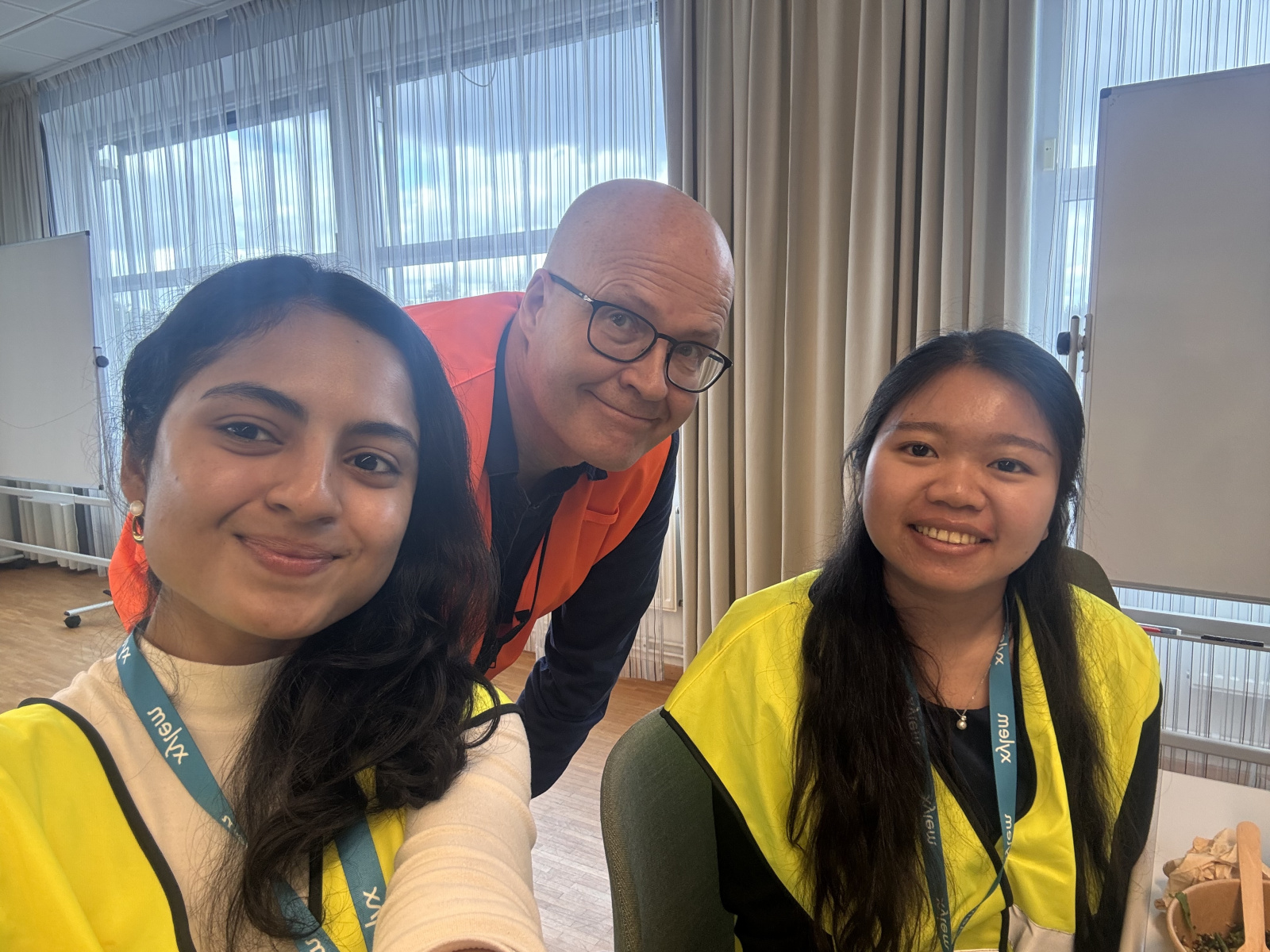
From left to right: Priyanka, Jan Backer, and Hao
Together in Stockholm
Two experiences stood out for both Hao and Priyanka. The first was a visit to Xylem’s Stockholm office and laboratory. The facility focuses on pump technologies, and watching engineers test systems and solving practical problems made the point that products must work reliably in real-world conditions. For Hao, it opened a sense of what a career in water technology can look like beyond academia, in the engineering of reliability, scale, and operation. Priyanka, who identifies as an entrepreneur, was struck that sustainability-driven work can also be a resilient business. The group saw pumps, pumping stations, and pressure-boosting systems, learned about Xylem’s global reach and emphasis on research, and met the youth engagement team, whose career services connect young people in jobs in the water sector. Priyanka also spoke one on one with an engineer who has worked on hydraulic systems for Xylem for many years, and he shared the company’s history along with Stockholm’s culture of innovation. Both Priyanka and Hao left thinking more seriously about long-term careers in a sector that is fundamental to human health, communities, industry, and ecosystems.
A second memorable experience was a session with the 2026 Stockholm Water Prize laureate, Professor Kaveh Madani, held in the presence of His Majesty King Carl XVI Gustaf, patron of the prize. Madani, who directs the United Nations University Institute for Water, Environment and Health, was recognized for his research on water governance and shared river basins. He spoke about “water bankruptcy,” the idea that a water system is so overused it can no longer return to its natural balance. Unlike scarcity or stress, which water systems can still bounce back from, water bankruptcy follows when withdrawals keep exceeding inflows and reserves. For Priyanka, it was a sharper way to explain why some water crises cannot be solved by waiting for the rains to return. On the same panel was an Australian Stockholm Junior Water Prize winner, a high school student who spoke with confidence about his work on algal blooms. Seeing people at such different stages contributing to the same mission made Hao feel she could find a place in this community too.
To conclude, Hao and Priyanka were very appreciative of J-WAFS, Xylem, and GoAigua for making this experience possible, and Xylem for welcoming them into its Stockholm office and laboratory.