

News J-WAFS at the World Food Forum 2026
November 9, 2026
J-WAFS at the World Food Forum 2026
In October, J-WAFS took part in FAO's World Food Forum in Rome. This year's theme was "Innovate today. Nourish tomorrow." and more than 90,000 people from 189 countries joined in person and online. We went with a specific question in mind that we wanted to ask different stakeholders and practitioners: how are decisions made when evaluating readiness to scale for agricultural water innovations.
What we took away from the Forum
Three messages from the wider Forum are directly relevant to our work.
First, innovation is judged by whether it reaches farmers. Opening the Science and Innovation Forum, FAO's Director-General Qu Dongyu proposed three tests for innovation: reach, rigor and resources. In his closing remarks, he came back to the gap between research results and implementation at scale. This is the gap J-WAFS is working to close.
Second, in agricultural water, governance matters as much as technology. The Rome Water Dialogue focused on water tenure: who has access to water, at what price, and who is left without. FAO's message was that efficiency gains without inclusion can deepen inequality.
Third, evidence needs to translate into investment. At the Hand-in-Hand Investment Forum, 38 countries and five regional initiatives presented a record of $20.16 billion in proposed agrifood investments. Governments and investors want evidence they can act on.
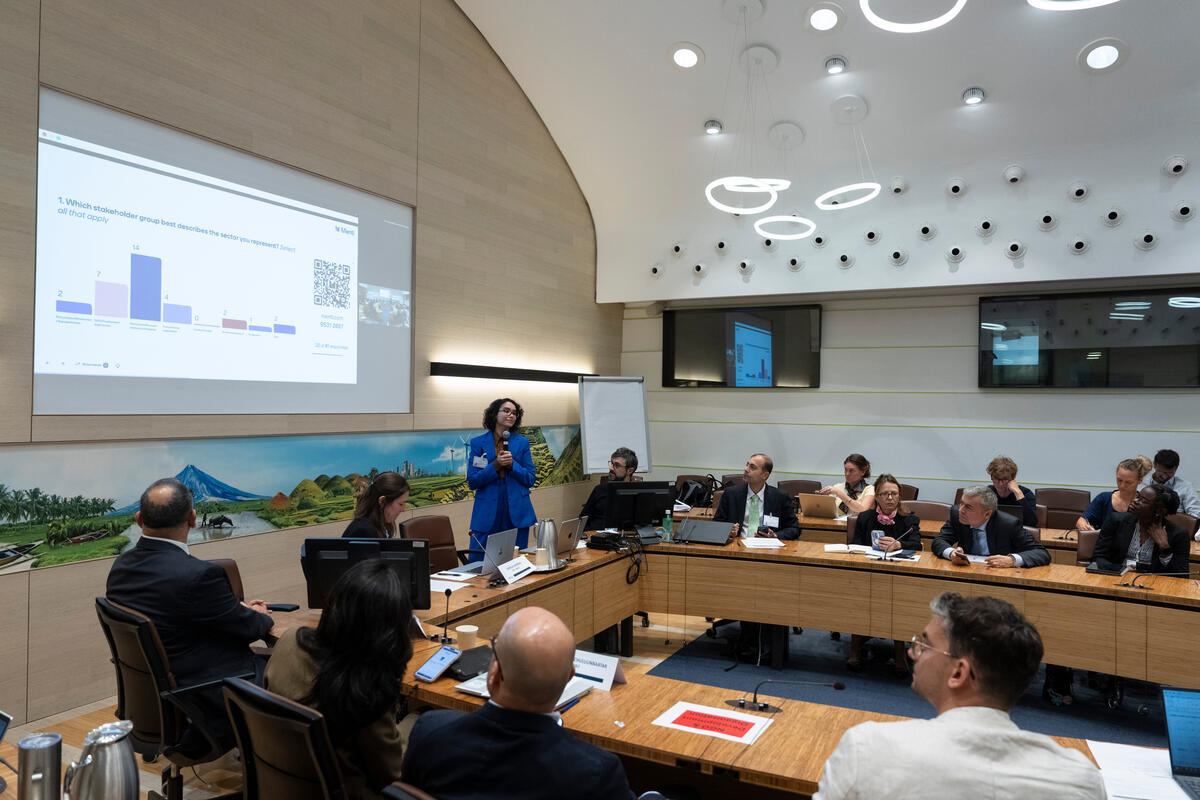
J-WAFS postdoc Noormah Rizwan presenting at "Evaluating Readiness to Scale for Agricultural Water Innovations" side event.
Our side event
On October 13, we hosted "Evaluating Readiness to Scale for Agricultural Water Innovations" at FAO headquarters, together with ICARDA, IHE Delft and IWMI. 73 people joined us in the room and online, from research institutions, NGOs, the private sector, farmer organizations, and government.
The session was a listening exercise: we wanted to understand how people working with technologies such as drip irrigation, sensing and water harvesting decide what to adopt and scale, what information they use, and what is missing. We are still analyzing the results and will share a full summary with participants, but some early patterns are already clear.
Most participants told us that technologies rarely stall because they don't work. They stall because finance, skills, extension, or policy support are missing, and usually several of these at once. Yet when asked how they judge whether a technology is ready to scale, most looked at what farmers do, for example whether they use it or are willing to pay for it. Very few looked at policy or finance. The conditions that hold technologies back are often not part of how readiness is assessed.
We also heard that there is no common way of assessing readiness, and that the evidence people need is either missing or scattered across many sources. One participant asked for "all the data, evidence and relevant information in ONE place."
This is the work we will take forward with our partners, and we want to continue engaging with different stakeholders to add depth to our work and cover a real gap.
Thank you to everyone who took part, and to our colleagues at IWMI, ICARDA, IHE Delft and FAO for making the session possible, and the two young scientists, part of the global youth action, that supported the session.
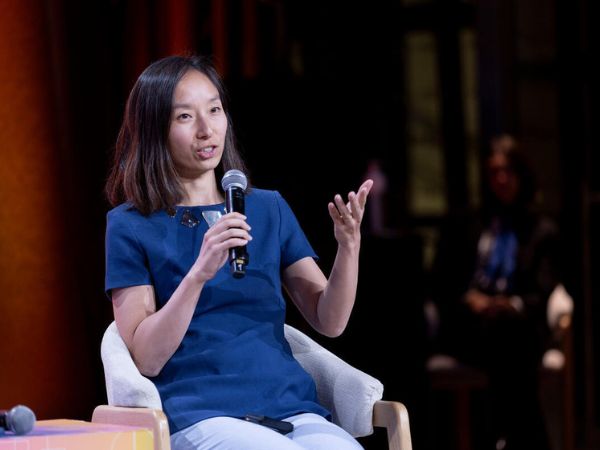
J-WAFS director of strategic partnerships and initiatives Longzhen Han speaks on the panel "How to Reboot Agrifood Investment for a New Generation."
Youth and innovation
Longzhen Han, who leads Strategic partnerships and initiatives at J-WAFS, also spoke on the “How to Reboot Agrifood Investment for a New Generation?” panel on the Forum's Global Youth Action track. Read the full recap here.
Next: the UN Water Conference in Abu Dhabi
The conversation continues in December at the 2026 UN Water Conference, co-hosted by the United Arab Emirates and Senegal in Abu Dhabi from December 8-10 (UN DESA via Blue Community). The conference focuses on accelerating progress on SDG 6: Clean Water and Sanitation and turning commitments into action (WAM). We will share what we have learned since Rome and continue building this work with our collaborators. More information on the side event hosted in the OASIS (UAE hosted zone of the conference) will be added soon.
Registration here: https://www.unwaterconferenceuae.com/en/register.
If you would like to stay involved, please contact dgiard@mit.edu and noorm379@mit.edu.