

News Adeposi Adeogun selected for 2026 J-WAFS Fellowship
By Sofia Rutman May 8, 2026
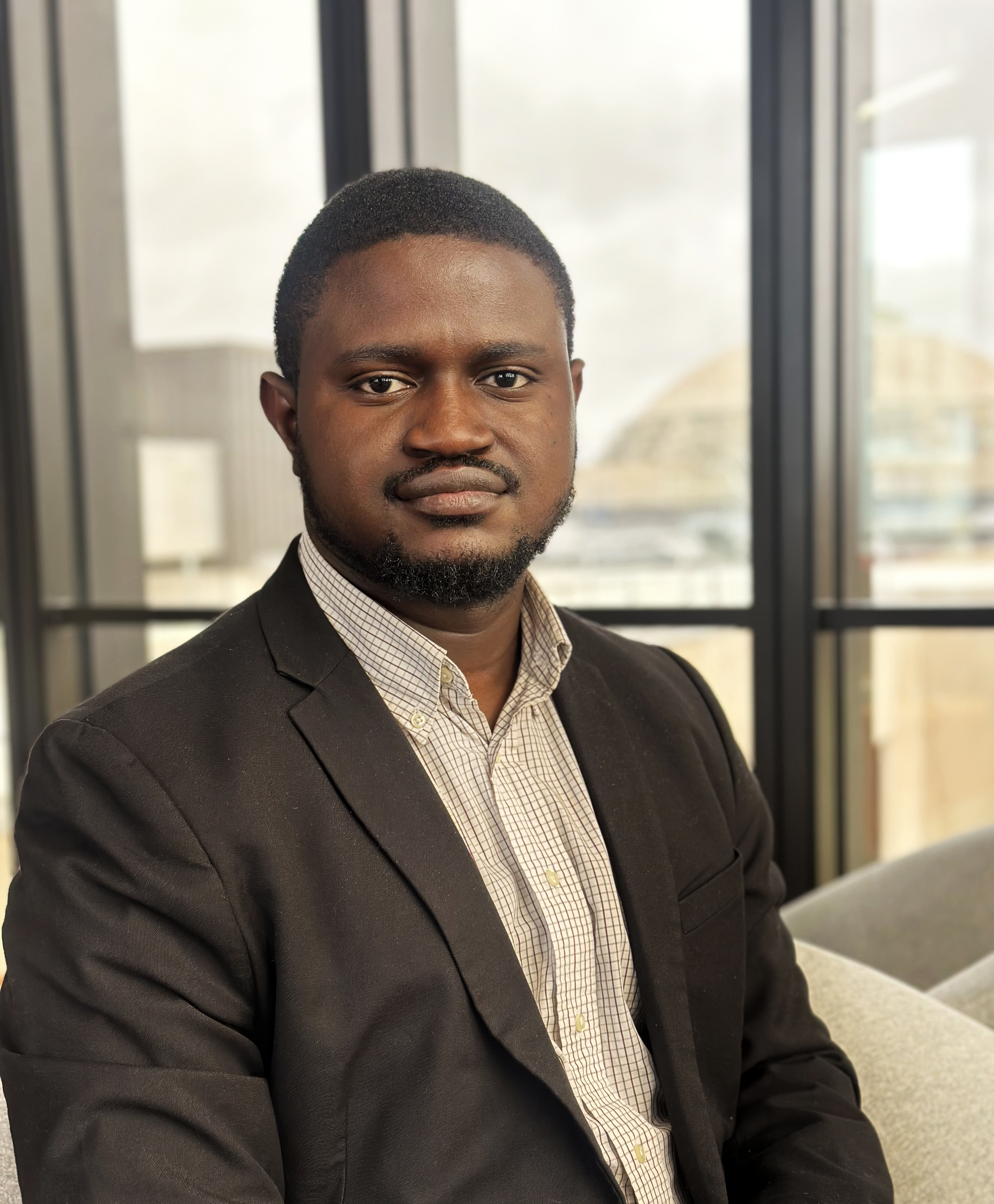
J-WAFS is excited to announce that PhD Candidate Adeposi Adeogun has been awarded the 2026 -2027 Rasikbhai L. Meswani Fellow for Water Solutions! The fellowship is awarded to doctoral students pursuing innovative solutions in water availability, quality, and management. It is supported by Elina and Nikhil Meswani and family.
Adeposi studied architecture and urban design at the University of Lagos, where he earned his undergraduate degree and a master's in environmental design. He also studied at the School of Art and Design in Stuttgart, Germany. Growing up in Lagos, Nigeria, he experienced the effects of water scarcity firsthand. Now a PhD candidate in international development at MIT, Adeposi aims to incorporate community knowledge and effective local governance into citywide resource management planning.
Adeposi’s research deconstructs the modern “ideal” of centralized resource distribution through a grid system. In his home city of Lagos, for example, despite the tropical climate, inadequate planning as well as technological challenges unique to the region have meant the city’s millions of inhabitants frequently face problems accessing clean water. In the face of investments in centralized water systems that amount to nearly 40 times the estimated cost, Adeposi recognizes that top-down water distribution is likely not the most efficient or viable solution. Instead, he argues, urban planners should be looking at the systems that already work, and how they operate. To accomplish this, his research looks at Community Development Associations (CDAs) and maps their traits and effectiveness, using outliers to inform analysis of how these local systems are able to ensure water access to their communities.
During his fellowship, Adeposi will build on his previous experience working with city-scale quantitative datasets to map informal urban services such as transit. He will conduct a survey to map these CDAs and analyze their spatial distribution, and conduct ethnographic fieldwork to gain understanding of the human connections and political network that allows the CDAs to distribute water despite not being linked in a formal grid.