
News J-WAFS announces this year's water workshop grant recipient
Mia Jeffries December 16, 2025
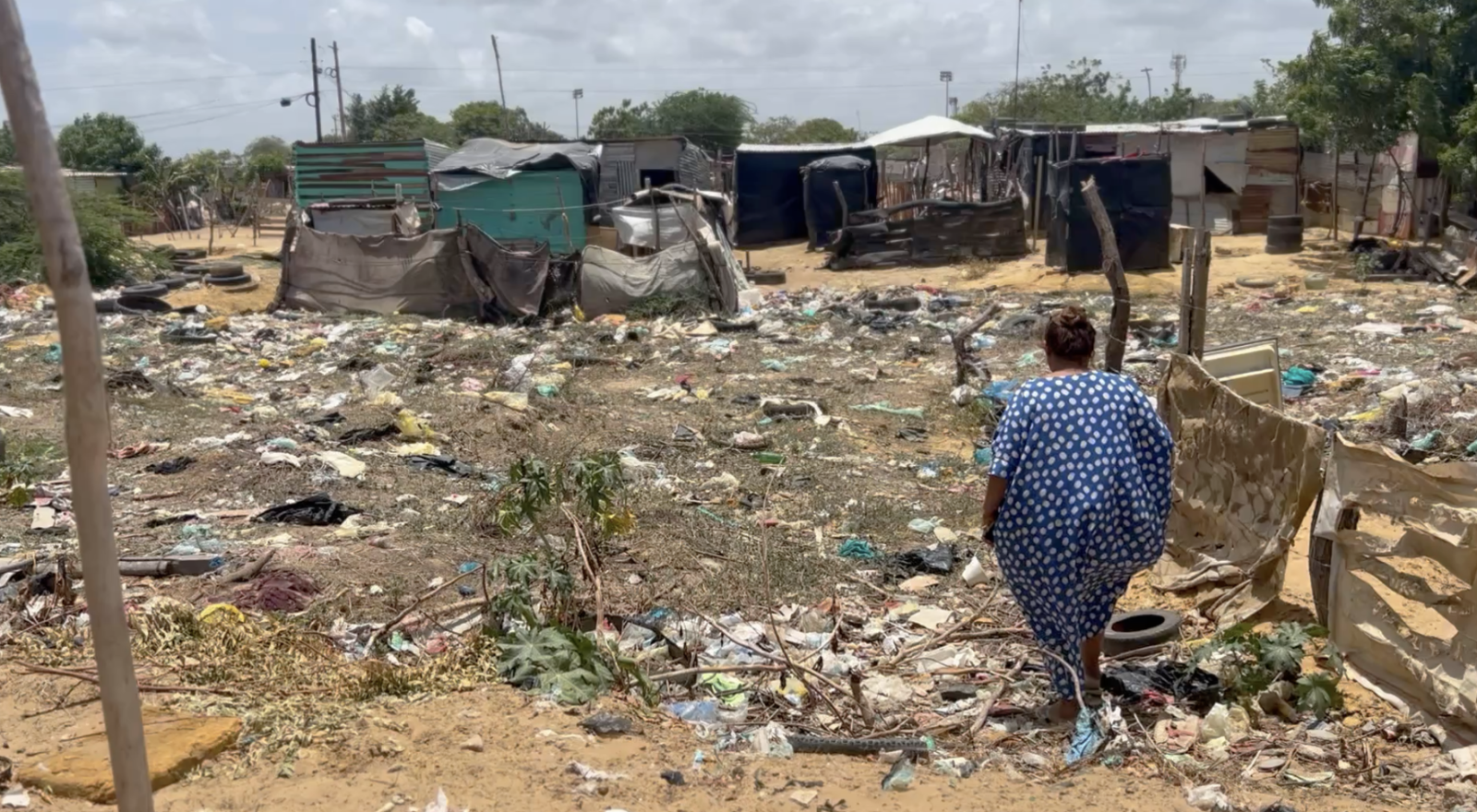
A woman standing near a group of make-shift shelters at the La Pista settlement.
This year, J-WAFS launched a new funding opportunity in collaboration with Rorra, an innovative water filtration brand. The award provides $5,000 to support a workshop on water-related issues to be held on MIT campus. We are excited to announce that Professor Sarah Williams of the Department of Urban Studies and Planning is this year’s award recipient.
Williams, director of the Civic Data Design Lab and the Leventhal Center for Advanced Urbanism, has previously received a seed grant from J-WAFS. Complimentary to the seed grant project, the workshop will focus on climate-affected areas in Northern Colombia, examining multiple water and food insecurity challenges through the intersections of immigration and cultural practices. Gaby Carucci, the seed grant project manager and a researcher at the Leventhal Center, sat down with us to talk about the workshop and next steps for the project.
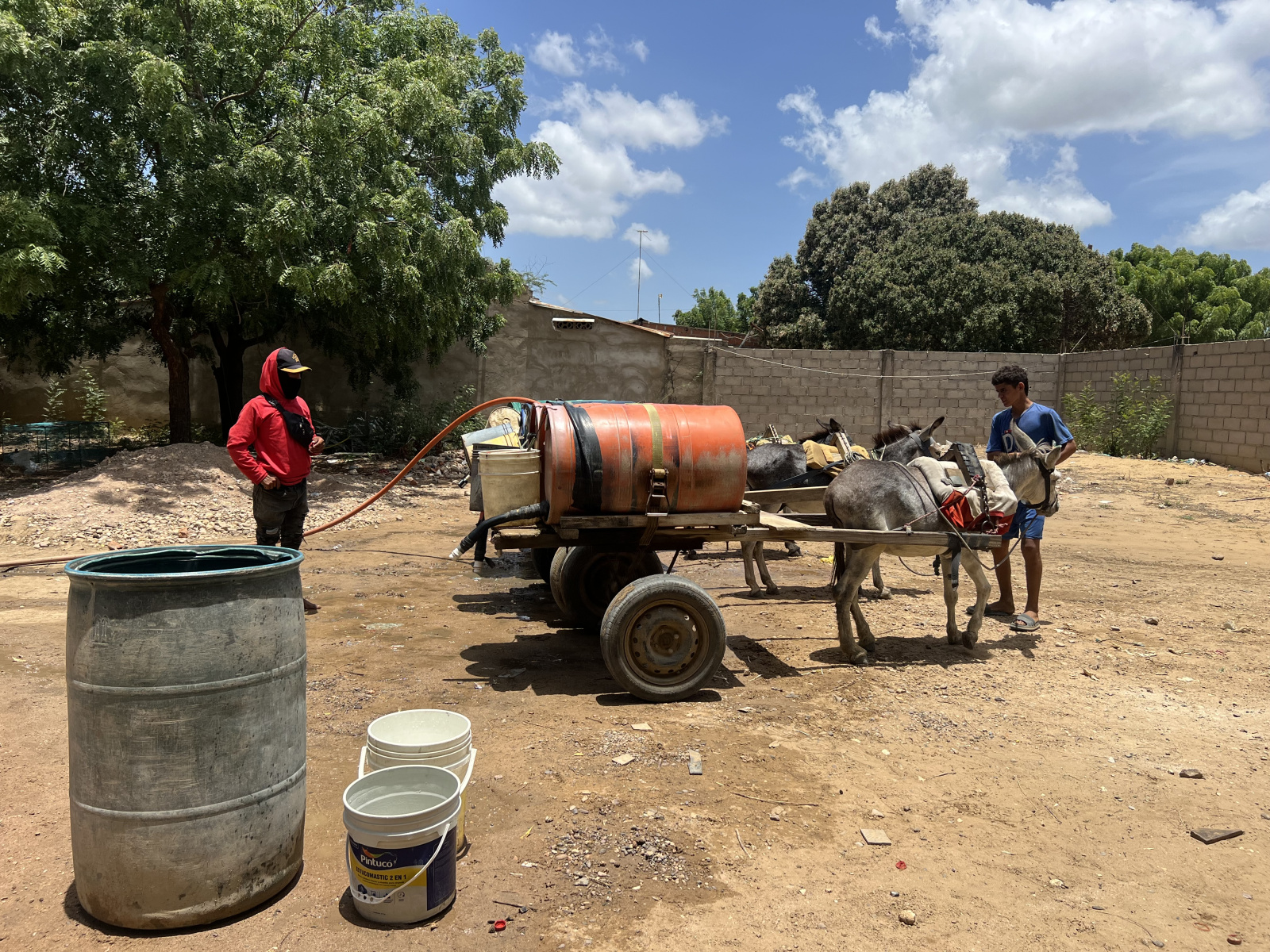
A man and child collecting well water.
“We had been working with our partners from the World Food Program in South America, and one of them pointed out to us that there is this community of Indigenous people as well as people who have migrated from Venezuela as well as from the Wayuu communities in La Guajira, who are living in a settlement in Colombia and are facing water and food insecurity. I think it was through that first collaboration and talking to our partners that we realized this is an issue we really care about,” said Carucci.
Over the last ten years, thousands of people have settled in La Pista, which is named after its location. In Spanish, the meaning of “pista” is “runway.” The informal settlement sits in fact along the abandoned runway at Maicao Airport, in La Guajira, Colombia. It has been estimated that between 12,000 and 15,000 people live in the settlement. Most of them are Venezuelan, but there are also Colombian returnees and Wayuu Indigenous people, native to both countries.
Due to the supposed “transitional” stay in the settlement, residents of La Pista cannot build formal houses and lack basic access to clean water, sanitation and electricity. Moreover, due to climate change, the inhabitants of the informal settlement are exposed to extreme weather events that can cause both flooding and drought. Working with local communities and organizations, Williams’ team plans to strategically and sustainably improve water security in La Pista.
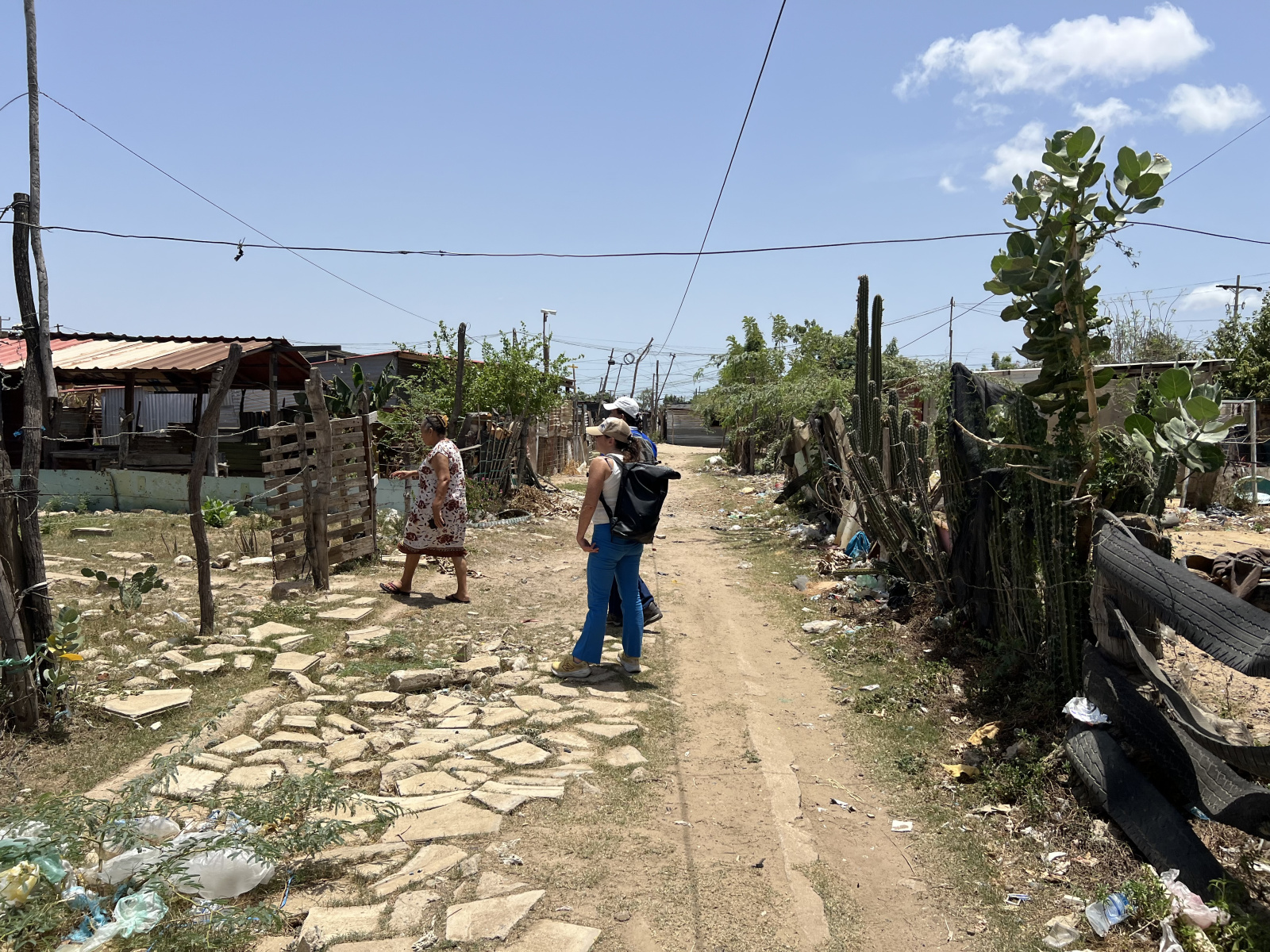
A woman walking two researchers through La Pista
Following the first stages of the seed grant, Williams hopes to bring more technical solutions to the problem. In the upcoming workshop titled, Water Security in the Climate-Displaced Community of La Pista: Technical Solutions and Indigenous Governance for Drought-Affected Settlements, the team aims to build on their ongoing work. Participants will examine topics of water infrastructure, governance, and engineering in the informal settlements of La Pista. The workshop intends to combine traditional ecological knowledge and indigenous practices.
The half-day event will range from panels with water experts to hands-on work to solve the infrastructural issues. Those in the MIT community with an interest in water planning/governance as well as Boston-area experts are encouraged to attend. The team will also bring in experts from La Pista, ensuring a comprehensive understanding of the issues these settlements face, and additionally, how to establish water systems that are long-lasting and practical. Workshop panelists will include experts in landscaping, sanitation, and flood management, ensuring a comprehensive approach to tackling the issue. Carucci noted, “There are so many people across geographies that are working on similar topics. I think it’s a very universal problem and there is so much we can learn if we just start a conversation, even if it's a half-day workshop.”
The team plans to host the event during the Spring semester. For future information on the workshop, please subscribe to our newsletter. We would like to thank Rorra for their generous contribution to the workshop. And again, congratulations to William’s team.
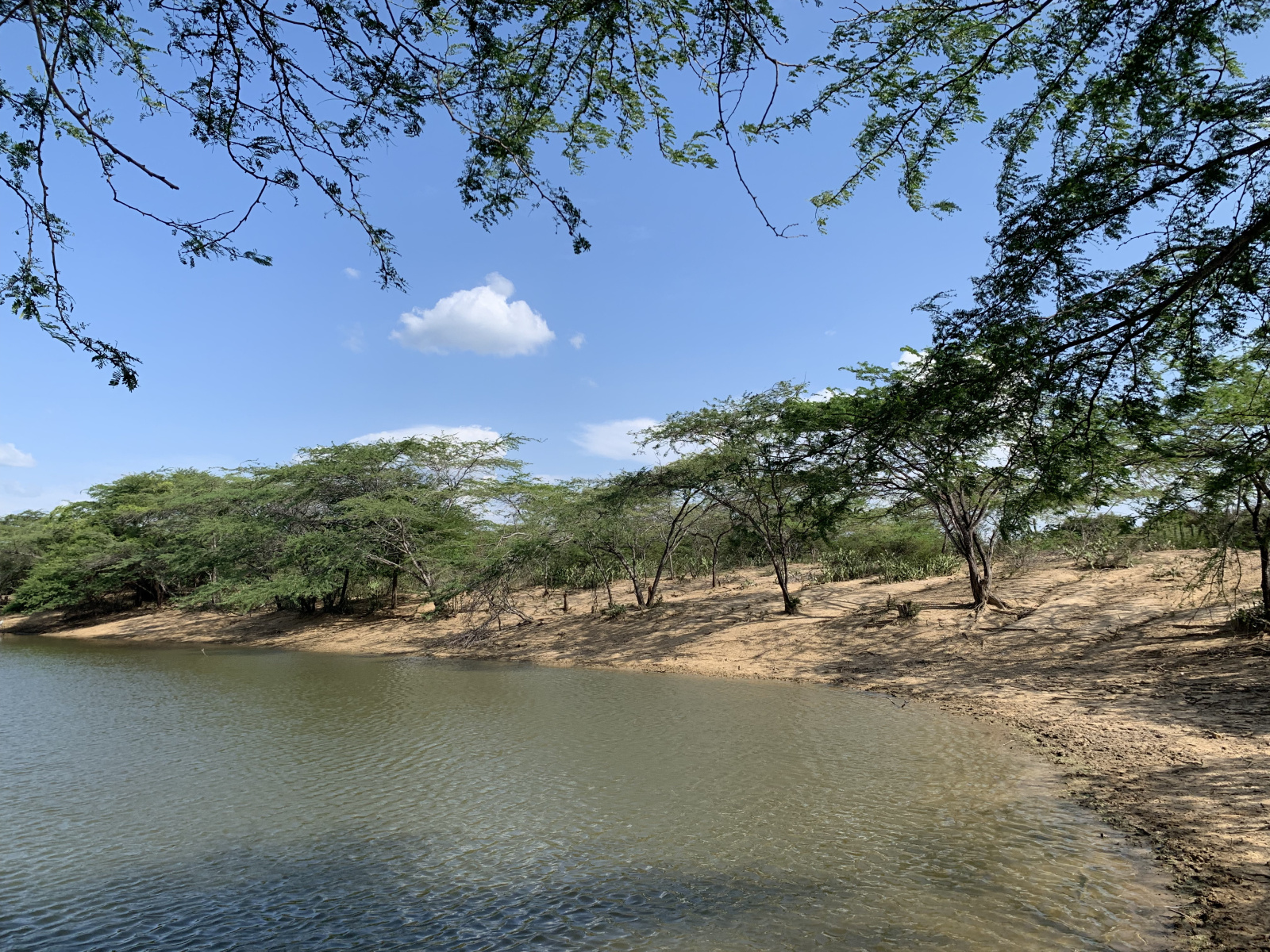
A large water basin used as a traditional method of water management.