
Events MIT J-WAFS seminars on global ecosystem restoration
Join us for three seminars this spring on ecosystem restoration and integrated landscape management and how they relate to food systems and water security.
March 19, April 16, and April 21
Laying the Groundwork for Global Restoration: Capacity Needs and Technical Barriers Across the Restoration Continuum -- This talk has now passed, please see below for the other talks
Speaker: Khalil Walji
Walji will explore the practical constraints countries face in implementing large-scale ecosystem restoration, with particular attention to the role of productive landscapes in sustaining food systems and water security. Drawing on work under the Global Biodiversity Framework’s Target 2 and Integrated Landscape Management initiatives, the seminar will examine how restoration is not a binary shift from “degraded” to “restored,” but a continuum of recovery, where agricultural lands, rangelands, forests, and agroforestry systems can progressively rebuild ecosystem services.
Date: Thursday, March 19, 2026
Time: 4:00 - 5:00 p.m. ET
Location: MIT Campus -- Room will be emailed to registrants. This is an in-person event. You MUST use an MIT email address to register, or an email address from a university or organization in the greater Cambridge and Boston area.
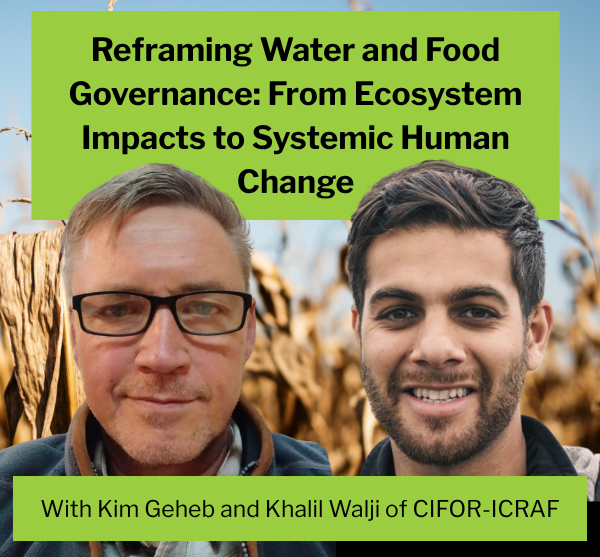
Reframing Water and Food Governance: From Ecosystem Impacts to Systemic Human Change
Speakers: Kim Geheb and Khalil Walji
This talk will draw on lessons from the Landscapes for Our Future program, focusing on how shifts in governance, incentives, and human behavior can yield durable water and food outcomes.
Date: Thursday, April 16, 2026
Time: 4:00 - 5:00 p.m. ET
Location: MIT Campus -- Room will be emailed to registrants. This is an in-person event. You MUST use an MIT email address to register, or an email address from a university or organization in the greater Cambridge and Boston area.
Mekong Hydrocorruption: Water, Dams and the Subjugation of a Great River
Speaker: Kim Geheb
The Mekong River is an exceedingly dammed system with massive, and discernible impacts on its hydrological flows, sediment loads, fisheries, and riparian livelihoods. But it also has an effect on its regional relations. While the hydropower build-out is often cast as reinforcing China’s hydro-hegemony, or Laos’ impacts on downstream livelihoods, Geheb argues that it brings the Mekong Region closer. He contends it does this through the electricity it supplies and through the intra-regional collusion it has fostered and enabled. Drawing mainly on Laos and Cambodia’s hydropower development experience, Geheb offers a story of graft, concrete, and the destruction of one of the world’s most astonishing rivers.
Date: Tuesday, April 21, 2026
Time: 4:00 - 5:00 p.m. ET
Location: MIT Campus -- Room will be emailed to registrants. This is an in-person event. You MUST use an MIT email address to register, or an email address from a university or organization in the greater Cambridge and Boston area.
About the speakers:
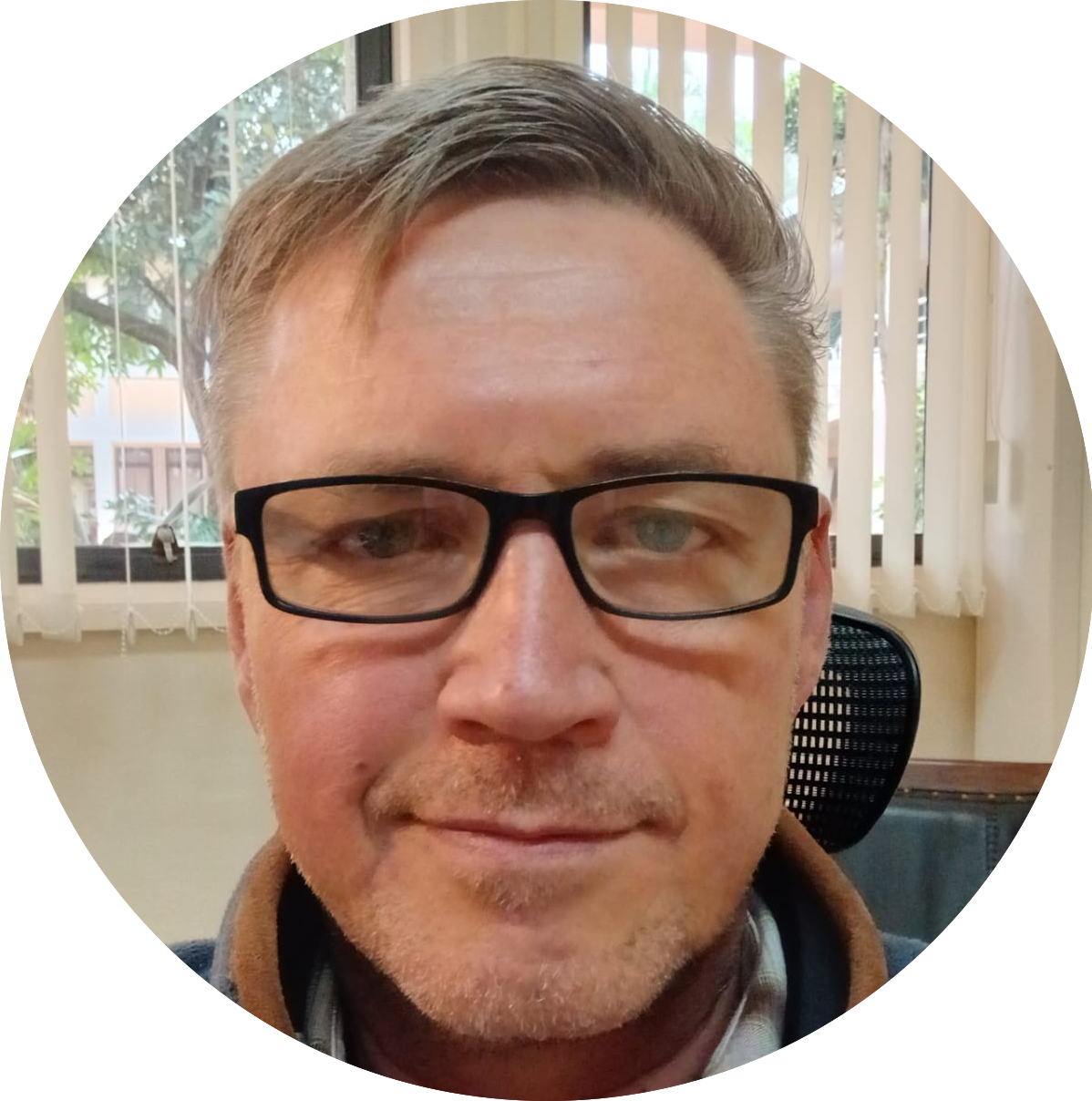
Kim Geheb is a political ecologist and practitioner-scholar with the Center for International Forestry Research/World Agroforestry Center in Nairobi, Kenya. He specializes in integrated natural resources management, water governance, and the political economy of natural resource institutions. He has worked extensively on food-water systems in Africa and Southeast Asia, and brings to both contexts a sustained focus on how power structures shape—and limit—governance outcomes. His current research applies complexity science and practice theory to the design of interventions that address systemic drivers of landscape degradation rather than their symptoms. His work draws on political ecology, commons theory, and assemblage thinking to reframe conventional approaches to ecosystem governance as fundamentally questions of institutional power and collective action. He obtained his doctorate from the School of African and Asian Studies at the University of Sussex, UK.

Khalil Walji is a global practitioner-scholar working at the intersection of ecosystem restoration, integrated landscape management, and sustainable food systems across the Global South. From 2021–2026, he is serving as Deputy Coordinator of the EU-funded Landscapes For Our Future (LFF) programme at CIFOR-ICRAF, advancing integrated landscape approaches through multi-stakeholder engagement, adaptive governance, and learning-oriented practice. Trained as a soil scientist with an interdisciplinary background, his work focuses on translating systems-level theory into practice in complex landscapes where food security, biodiversity, and livelihoods intersect.